Google Private AI Compute represents a groundbreaking shift in how the tech giant handles cloud-based artificial intelligence processing. Announced on November 10, 2025, this new infrastructure addresses the growing limitations of on-device AI processing while maintaining the privacy standards users expect from their personal devices.
What is Private AI Compute Technology
Private AI Compute technology is Google’s innovative solution that brings cloud-scale intelligence to AI tasks without compromising user privacy. Unlike traditional cloud AI systems where data is processed on company servers, this approach creates a hardware-secured sealed cloud environment that treats your information with the same protection as on-device processing.
The system enables Gemini cloud models to handle complex AI tasks that would be impossible on smartphones or tablets alone. When your Pixel device needs additional processing power for advanced features, Private AI Compute steps in with robust computational resources while maintaining strict privacy boundaries.
Google’s engineering team designed this infrastructure specifically to overcome on-device AI processing limitations. Modern AI features like advanced image generation, real-time language translation, and contextual understanding require substantial computational power that mobile processors simply cannot deliver efficiently.
Google’s Tensor Processing Units Power the System
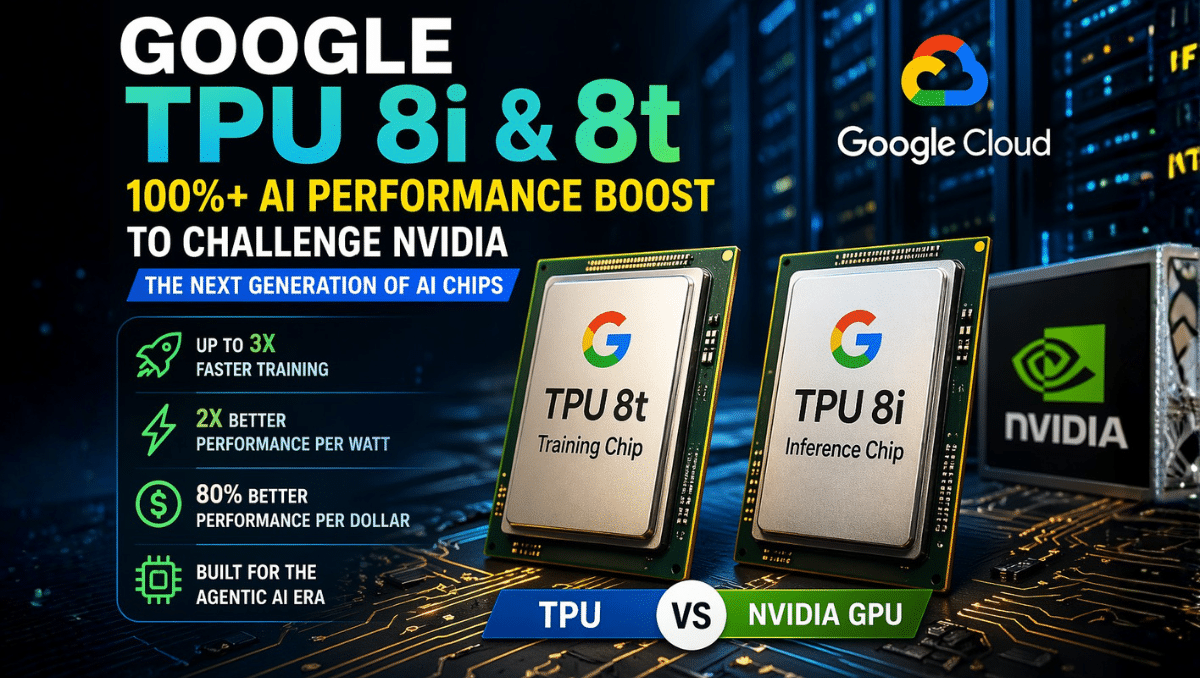
At the heart of Google’s new infrastructure are Tensor Processing Units (TPUs), custom-designed chips optimized specifically for AI workloads. These specialized processors deliver the computational muscle needed for running sophisticated Gemini models in the cloud while maintaining exceptional energy efficiency.
The latest generation of TPUs deployed in this system can handle massive neural network computations exponentially faster than general-purpose processors. Similar to how Google expanded TPU infrastructure in India for sovereign AI capabilities, the Private AI Compute system leverages this advanced hardware across Google’s global data centers.
Titanium Intelligence Enclaves (TIE) form the security backbone of the entire system. These hardware-secured environments create isolated computing spaces where AI processing occurs completely separate from other cloud operations. Even Google’s own engineers cannot access data processed within these enclaves, establishing a zero-trust architecture that fundamentally changes cloud AI security.
The encryption framework uses remote attestation encryption to verify that computations occur only within verified, secure enclaves. Before any data leaves your device, cryptographic protocols confirm the destination environment meets stringent security requirements.
Google vs Apple: Private AI Cloud Comparison
The Apple Private Cloud Compute comparison reveals both similarities and key differentiations in approach. Apple pioneered the private cloud AI concept with their infrastructure launched in 2024, establishing the blueprint for privacy-preserving cloud intelligence.
Google’s implementation shares Apple’s core philosophy: data processed in the cloud should maintain the same privacy guarantees as on-device processing. Both systems use hardware-based security, encrypted connections, and stateless processing where no user data persists after task completion.
However, Google’s approach leverages its extensive cloud infrastructure built through investments like the recent expansion in Germany, providing potentially greater scale and availability. The TPU advantage gives Google specialized AI hardware designed specifically for machine learning workloads, whereas Apple’s implementation relies on custom silicon optimized for their ecosystem.
Google AI cloud privacy measures extend beyond basic encryption. The system implements privacy-enhancing technologies (PETs) that include differential privacy, secure multi-party computation, and federated learning principles. These technologies ensure that even aggregate data patterns cannot reveal individual user information.
How Gemini Cloud Models Enable Advanced AI
Gemini cloud models represent Google’s most capable AI systems, far exceeding what can run locally on mobile devices. Private AI Compute makes these powerful models accessible while respecting user privacy boundaries.
The Pixel 10 Magic Cue feature demonstrates this capability in action. This intelligent assistant can understand complex contextual requests, generate detailed responses, and perform multi-step reasoning tasks by tapping into Gemini’s full capabilities through the private cloud infrastructure.
The Pixel Recorder app showcases another practical implementation. Advanced transcription, speaker identification, and content summarization happen in real-time by seamlessly connecting to Gemini cloud models through the secure Private AI Compute infrastructure.
Privacy-Enhancing Technologies PETs Integration
Privacy-enhancing technologies PETs form a critical layer of Google’s security architecture. These sophisticated cryptographic and statistical methods ensure privacy protection even during active AI processing.
Differential privacy adds mathematical noise to computations, making it impossible to extract individual user information even if someone gained unauthorized access to processing data. The system maintains utility for AI tasks while providing provable privacy guarantees.
Secure enclaves combined with federated learning principles mean that model improvements can occur without centralizing user data. Individual device interactions contribute to model refinement through encrypted gradient updates rather than raw data transmission.
The hardware-secured sealed cloud environment operates under verifiable security policies. Independent researchers can audit the system’s security properties through published protocols and cryptographic verification methods, establishing transparency without compromising operational security.
Enterprise and Developer Implications
Beyond consumer applications, Private AI Compute opens significant opportunities for enterprise adoption. Organizations can leverage Google’s powerful AI capabilities while maintaining compliance with strict data protection regulations like GDPR and healthcare privacy requirements.
Developers gain access to Gemini’s advanced capabilities without building complex on-device AI systems. The infrastructure handles scaling, security, and privacy concerns, allowing development teams to focus on creating innovative AI-powered features.
The competitive landscape now includes Google’s approach alongside Apple’s Private Cloud Compute and Meta’s Private Processing framework. This competition drives innovation in privacy-preserving AI technologies, ultimately benefiting users across platforms.
Implementation Timeline and Device Availability
Initial Private AI Compute availability centers on Pixel 10 devices, with Google planning broader rollout across its device ecosystem throughout 2025 and 2026. The phased approach allows refinement based on real-world usage patterns and security validation.
Integration with Google Workspace and enterprise Google Cloud services represents the next expansion phase. Businesses will gain access to privacy-preserving AI features for document analysis, meeting transcription, and intelligent automation without compromising sensitive corporate data.
The infrastructure builds on Google’s substantial cloud investments, including projects that have driven significant regional growth and positioned the company for the trillion-dollar AI market opportunity.
Security Architecture and Verification
The security model relies on multiple defense layers working in concert. Encrypted connections protect data in transit, Titanium Intelligence Enclaves secure data during processing, and stateless operations ensure no persistent data storage.
Independent security researchers can verify these protections through published security protocols and remote attestation mechanisms. This transparency allows external validation while maintaining the system’s operational security.
Google’s commitment to “on-device-level privacy in the cloud” establishes a new standard for cloud AI services. The approach demonstrates that powerful cloud intelligence and strict privacy protection aren’t mutually exclusive—they can coexist through thoughtful architectural design and advanced security technologies.