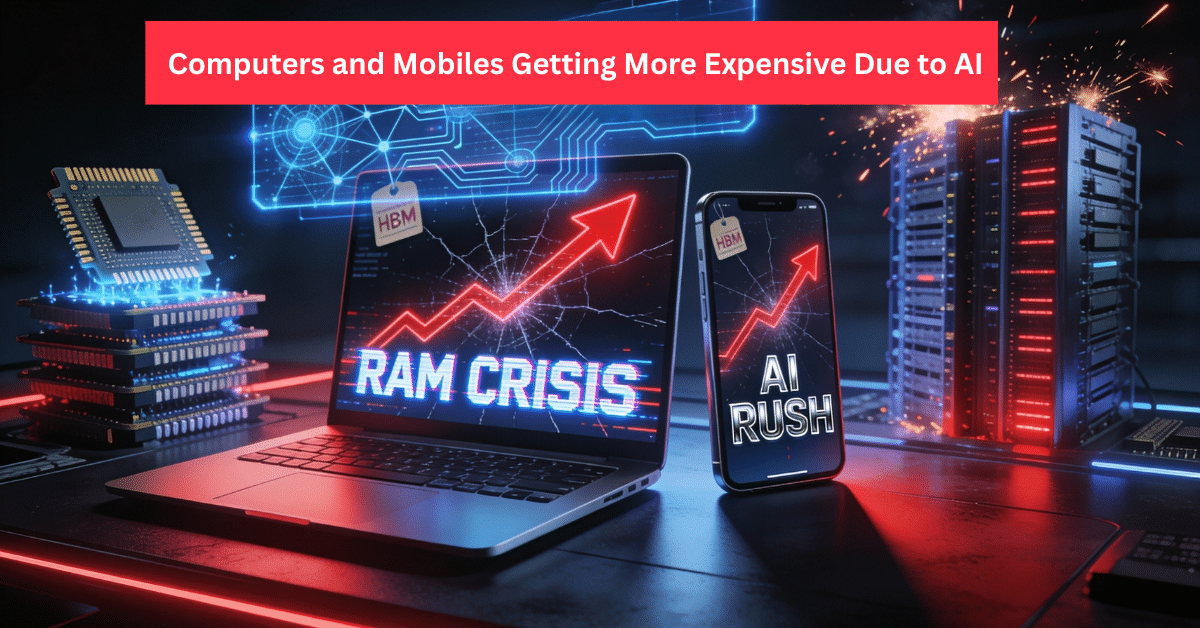
Computers and mobiles getting more expensive due to AI – that’s the stark reality unfolding across the tech world today. The explosive AI compute rush has ignited a fierce memory chip crisis, driving up costs for laptops, smartphones, and tablets everywhere. What started as a server-side scramble now slams everyday buyers with 20-30% higher price tags on gadgets we rely on daily.
- RAM prices have skyrocketed 3-6 times year-over-year, flipping affordable PC upgrades into premium splurges.
- Massive HBM demand from AI data centers devours supplies, inflating consumer electronics prices across the board.
- Samsung SK Hynix, the memory giants, slapped 60% hikes while shifting focus to high-end servers.
- Micron Crucial exit from consumer markets by February 2026 slashes cheap memory options for phones and PCs.
- PC laptop costs now add hundreds extra, hitting gamers, students, and remote workers hardest.
Why the Memory Squeeze Hits Hard Right Now
This server memory shift isn’t abstract – it’s reshaping how we access tech. AI titans like OpenAI and xAI crave endless high-speed memory for models with trillions of parameters, outpacing factory output. New fabs won’t fully kick in until late 2026, so the DDR5 shortage keeps squeezing PC laptop costs and delaying your next upgrade. Dive into AI hardware trends for the bigger picture on these shifts.
Consumers feel it first in wallets. A mid-range gaming laptop that cost $800 last year? Try $1,000 now, thanks to pricier RAM prices. Budget phones trim storage to cope, frustrating users who expect smooth multitasking. Even tablets for kids or work see bumps, turning “back-to-school” sales into tough choices.
Root Causes: AI’s Insatiable Hunger for Memory
At the heart of this memory chip crisis beats AI’s need for bleeding-edge components. High-bandwidth memory like HBM powers the massive training runs behind chatbots and image generators. Demand surged 35% last quarter, but supply crawled at just 23%, creating pure scarcity.
Flagship devices bear the brunt early. Take Samsung’s upcoming Galaxy S25 – its RAM modules jumped in cost amid the frenzy.
“RAM in Galaxy S25 doubled from $35 to $70” – India Today report.
This isn’t isolated. HBM demand prioritizes data centers, starving mobile makers. Track it live with NVIDIA AI chip tracking tools showing real-time bottlenecks.
Big Players Pivot: Samsung, SK Hynix, and Micron Lead the Charge
Manufacturers reacted swiftly, but not in our favor. Samsung SK Hynix retooled factories for server-grade DDR5 shortage relief, hiking consumer RAM prices across segments. A basic 32GB DDR5 kit? $250 today versus $100 a year ago. Storage drives followed suit, up 50% for SSDs gamers love.
Micron made the boldest move yet, bowing out of Crucial’s consumer line to double down on AI.
“Micron halting Crucial consumer sales by Feb 2026 for AI focus” – TechRadar analysis.
They’re betting big, like their massive Japan plant expansion.
“DDR5 chip prices surged +298% from $6.84 to $27.20” – Intuition Labs data.
See details on the Micron AI memory plant pouring billions into this pivot.
Everyday Impacts on Laptops, Phones, and More
Consumer electronics prices ripple wide. AI-equipped laptops tack on $200+ for “future-proof” specs nobody asked for yet. Budget Androids drop to 4GB RAM, lagging on apps. PC builders wait months for parts, killing custom rig dreams.
Gamers vent online: “My 16GB build costs what a 64GB one did last year.” Professionals delay refreshes, sticking with aging hardware amid PC laptop costs spikes. Businesses? Small shops skip AI tools due to RAM prices, while enterprises hoard chips like gold.
Industry-Wide Fallout and Layoffs
The crunch fuels drama. Check AI chips December 2025 for layoffs at non-AI firms and analyst upgrades on memory leaders. JPMorgan eyes winners, but losers scramble. Global DRAM revenue shattered records at $25B+ quarterly, yet consumers lose out in the server memory shift.
Automotive tech feels it too – EV infotainment systems cost more, delaying rollouts. Servers? Stockpiled, but factories run 24/7 short. Experts predict another 15% consumer electronics prices bump in Q1 2026 if relief lags.
What Comes Next: Relief on the Horizon?
Hope flickers with new plants in the US, Japan, and Korea ramping by mid-2026. TSMC and Intel fabs could ease HBM demand pressure, stabilizing RAM prices. Until then, savvy shoppers hunt deals on current stock – Black Friday leftovers or clearance sales shine.
Brands might innovate: modular phones with swappable DDR5 shortage-proof memory? Or cheaper AI alternatives? Watch the AI compute rush evolve.
Computers and mobiles getting more expensive due to AI spotlights tech’s new divide: elite AI gains versus everyday trade-offs. Memory chip crisis forces smarter buying in this HBM demand-driven world. Plan ahead, prioritize needs, and ride out the storm.