
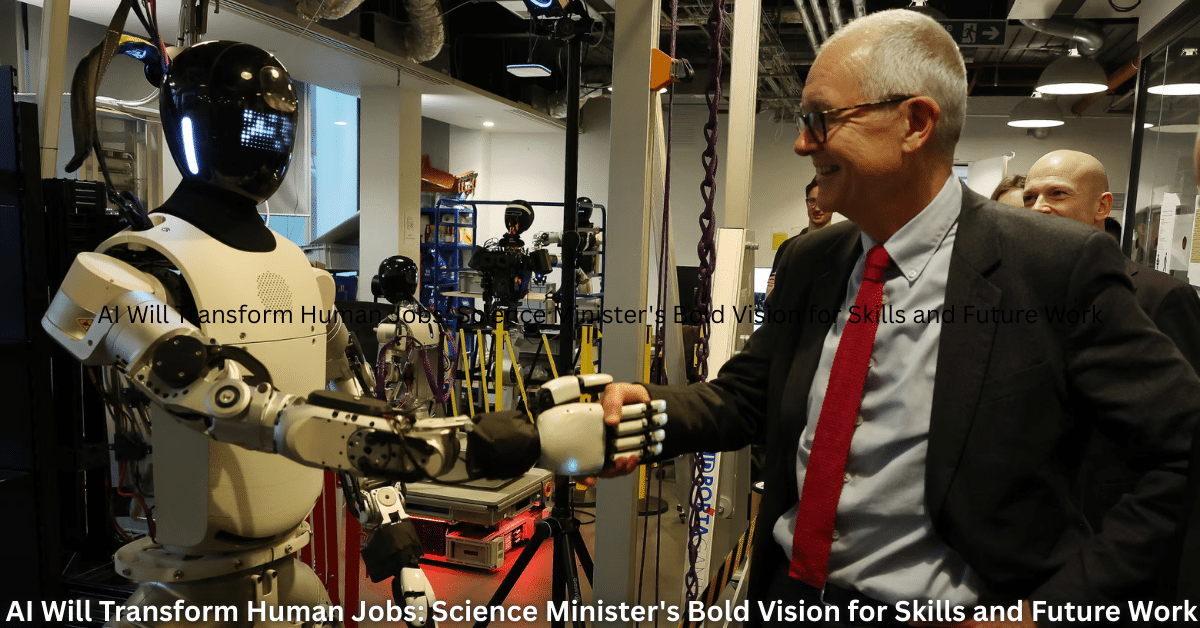
AI will transform human jobs and enhance skills, says the science minister. This key statement highlights how new tech like AI robotics will change work for everyone.
This news matters because it shows a positive side to AI changes in the job market. Many workers worry about losing roles to machines, but the minister points to growth in skills and new chances. The article explains the full view, with real examples and what it means for your career.
Key Highlights
- AI robotics will take over boring, repetitive tasks in factories and warehouses.
- Human workers will focus on creative thinking, problem-solving, and complex decisions.
- The science minister stresses that job transformation AI will make people better at their roles.
- UK science minister sees this as a big shift like past tech revolutions.
- Reskilling programs will help everyone adapt to future workforce skills.
- Early action now can turn AI into a boost for personal and business growth.
AI Will Transform Human Jobs: What the Minister Said
The science minister made a strong point at a recent event. AI will transform the ‘human job’ by handling simple, repeat work that tires people out. Robots and smart systems will do tasks like sorting boxes in warehouses or checking parts on factory lines.
This shift frees humans to use their best strengths. Think about it: instead of spending hours on the same motion, workers can plan, innovate, and lead teams. The minister noted that AI does not replace people – it upgrades what we do best.
In places like the UK, this idea ties to big government plans for tech. Early tests show factories running smoother with AI help, and workers learning new tools fast.
Robotics Advances and Repetitive Tasks
AI robotics advances are speeding up fast. Machines now learn from data to pick items, move goods, or even fix small issues without breaks. This cuts errors and boosts speed in busy spots like supply chains.
For everyday jobs, repetitive tasks robots handle best include data entry, basic assembly, or monitoring machines. A worker in a warehouse might once lift 100 boxes a day. Now, a robot does that while the person oversees quality or plans routes.
Businesses see real gains. Output rises 20-30% in some plants, and safety improves since humans avoid heavy lifts. But the key is training – companies must offer classes on working with these tools.
Impact on Warehouse Factory Roles
Warehouse and factory roles change most. Robots stack shelves or pack orders overnight. Humans step into roles like training bots, fixing glitches, or customer service.
One example: a UK firm tested AI arms for picking. Workers shifted to design tweaks, earning more over time. This matches the minister’s view – warehouse factory roles evolve, not vanish.
Safety stats back this. Injury rates drop when machines do risky repeats. Firms that adapt keep staff happy and productive.
Enhance Human Skills: The Real Opportunity
To enhance human skills, focus on what AI can’t match: empathy, creativity, and big-picture thinking. The minister pushes for learning programs in schools and jobs.
Reskilling programs teach coding basics, data reading, or AI ethics. Online courses make it easy – short videos and hands-on projects fit busy schedules. Governments and companies fund these to build a ready workforce.
Take a factory worker: after training, they program robots or analyze output trends. Pay often jumps as skills grow. This creates a cycle where people and tech lift each other.
Future Workforce Skills Needed
Key skills include:
- Problem-solving under change.
- Team leadership with machines.
- Basic AI tool use.
Schools add these now. Adults use free apps for quick lessons. The payoff? Jobs that pay well and feel meaningful.
Job Transformation AI: Wins for Businesses and People
Job transformation AI helps companies cut costs on repeats while growing teams in smart areas. Profits rise as work flows better. Small firms use cheap AI kits to compete with giants.
For people, it means less burnout from dull tasks. More time for family or side projects. The minister warns of short bumps, like shift learning curves, but long-term wins are huge.
Stats show AI adopters hire more in creative fields. A study of 500 firms found 15% net job growth after rollout. This balances fears with facts.
Challenges and How to Prepare
Not all smooth. Some fear AI job impact on low-skill roles. The minister admits needs for safety nets like job aid funds.
Prep steps:
- Learn one AI tool this month.
- Talk to bosses about training.
- Join local tech meetups.
Governments plan big: more funds for adult classes and AI rules that protect workers. Check AI Tools for Upskilling Workers for free starters.
Businesses thrive by mixing human smarts with machine power. Early movers lead.
What This Means for Your Career
AI robotics and skills focus change work for good. Enhance human skills through practice, and you stay ahead. The science minister’s words calm worries – this is evolution, not end.
Watch for new roles in oversight and innovation. Link to Future of AI in Jobs for more tips. Stay curious; the future rewards adapters.








Skills matters more now