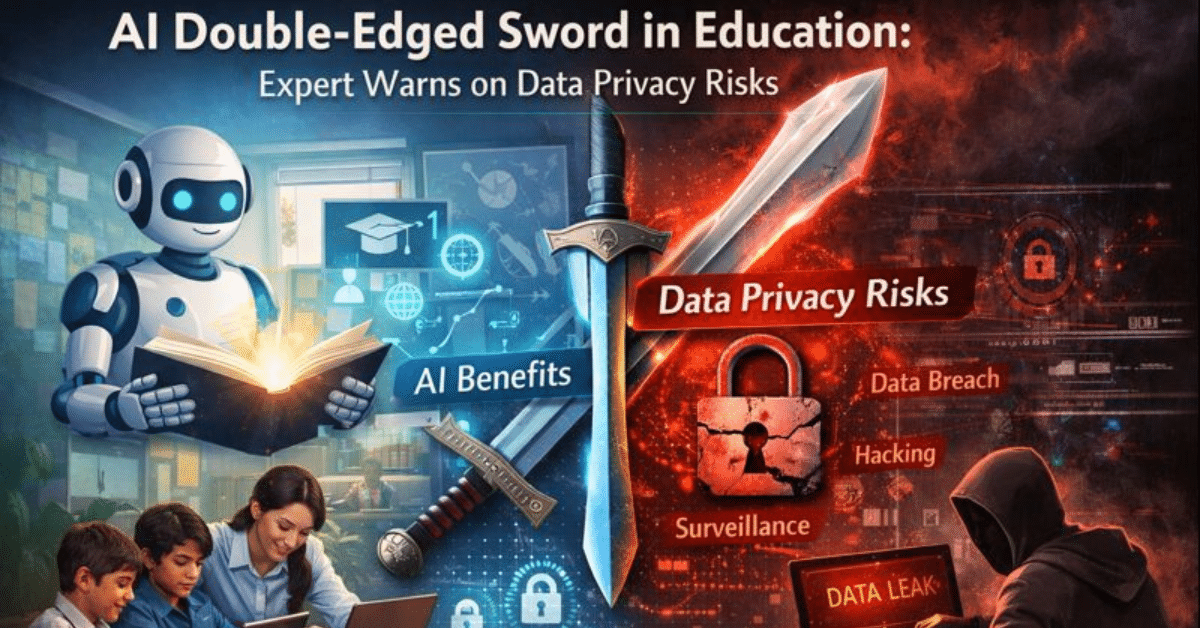
AI double-edged sword in education emerged as a hot topic after renowned educationist Shishir Jaipuria highlighted its dual nature during a recent Delhi event on December 19, 2025. He stressed the urgent need for data privacy in AI education to safeguard students amid rapid tech adoption. This call comes as personalized learning AI transforms classrooms but sparks AI ethics concerns.
Jaipuria, founder of GD Goenka Group, spoke at the launch of an edtech initiative, labeling AI a transformative yet risky force. Schools increasingly rely on AI for assessments and tutoring, but vulnerabilities loom large.
AI Double-Edged Sword in Education: Benefits vs. Pitfalls
The AI double-edged sword in education cuts both ways. On one side, personalized learning AI tailors lessons to individual needs, boosting engagement by up to 30% according to recent studies. Tools like adaptive platforms analyze student performance in real-time, helping teachers focus on weak areas.
Yet, the flip side alarms experts. AI cheating online assessments has surged, with students using generative tools to bypass proctors. Jaipuria noted instances where AI-generated answers fooled systems, undermining exam integrity.
Student data protection remains paramount. AI systems collect vast troves of personal info—learning styles, behavioral patterns, even emotional states—raising breach risks in under-secured platforms.
Educationist Shishir Jaipuria’s Urgent Call for Action
Educationist Shishir Jaipuria didn’t mince words: “AI is a double-edged sword in education sector. We must ensure data privacy while harnessing its power.” He advocated for robust AI guardrails education, including encrypted data handling and ethical guidelines.
Speaking in Delhi, Jaipuria pointed to global cases where student data fueled unauthorized profiling. In India, with over 250 million school students, lax policies could expose millions to cyber threats.
He praised initiatives like Top GenAI Courses in India 2025, which train educators on responsible AI use. Yet, he warned against hasty adoption without safeguards.
Data Privacy in AI Education: Key Challenges
Data privacy in AI education tops the concern list. Platforms track keystrokes, eye movements, and response times, creating detailed profiles. Without consent protocols, this data could be sold or hacked.
Business Standard on AI in Education reported similar worries, citing a 40% rise in edtech breaches last year. Ethical AI use schools demands anonymization and parental opt-ins.
Regulators like India’s NEP 2020 push digital equity, but AI ethics concerns persist. Jaipuria urged audits for all AI tools, ensuring compliance with GDPR-like standards.
Ethical AI Use Schools: Building Guardrails
Implementing AI guardrails education starts with policy. Schools should mandate vendor transparency on data flows. Student data protection tools, like federated learning, process info locally without cloud uploads.
Jaipuria highlighted success stories from Singapore, where AI tutors respect privacy via blockchain verification. India could adapt this for scalable impact.
Teacher training is crucial. Programs teach spotting AI cheating online assessments, using hybrid proctoring that blends human oversight with tech.
Personalized Learning AI: Balancing Innovation and Safety
Personalized learning AI shines in inclusivity, aiding neurodiverse students with custom paths. Tools like Duolingo or Khanmigo adapt difficulty dynamically, improving retention.
However, bias in algorithms perpetuates inequalities. Underrepresented data skews recommendations, as seen in US studies. AI ethics concerns demand diverse datasets.
Experts recommend open-source AI for audits. Pairing with human mentors ensures ethical AI use schools.
AI Cheating Online Assessments: A Growing Threat
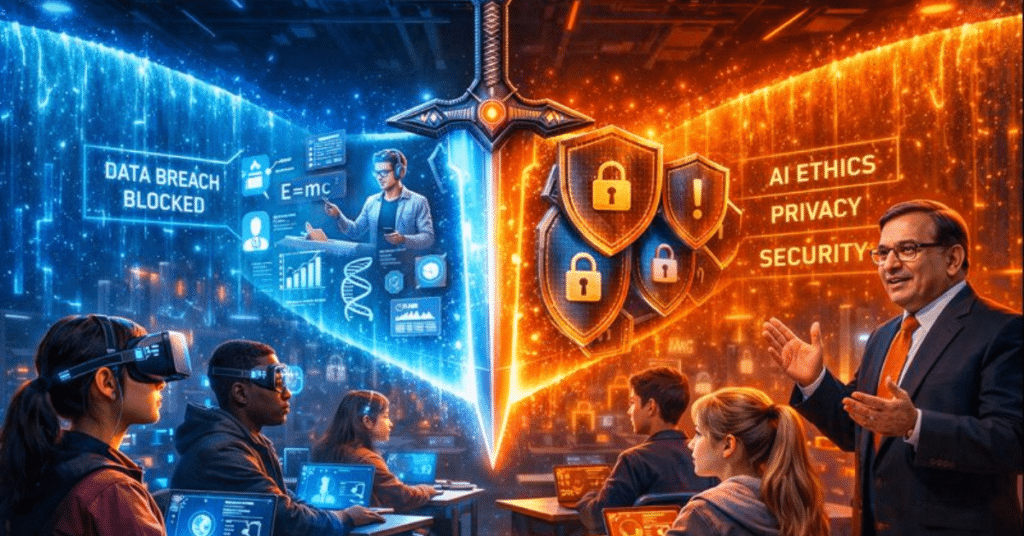
AI cheating online assessments exploded post-ChatGPT. Students craft undetectable essays, evading plagiarism detectors. Detection rates hover at 60%, per edtech reports.
Solutions include oral defenses post-tests and AI-resistant questions focusing on critical thinking. Jaipuria endorsed watermarking AI outputs for traceability.
The Week on Educationist Views echoed this, quoting Jaipuria on proactive measures.
Student Data Protection: Global and Indian Perspectives
Student data protection frameworks vary. EU’s GDPR fines violators heavily, while India’s DPDP Act 2023 lags in enforcement. Jaipuria called for school-level data officers.
Cybersecurity firms predict 25% edtech attack growth by 2026. Encryption and zero-trust models counter this.
Parents must demand transparency. Tools like privacy dashboards empower informed choices.
Path Forward: Responsible AI Adoption
Jaipuria’s vision blends optimism with caution. AI guardrails education will unlock potential without peril. Policymakers, schools, and tech firms must collaborate.
Invest in ethical AI use schools via certifications. Explore Top GenAI Courses in India 2025 for upskilling.