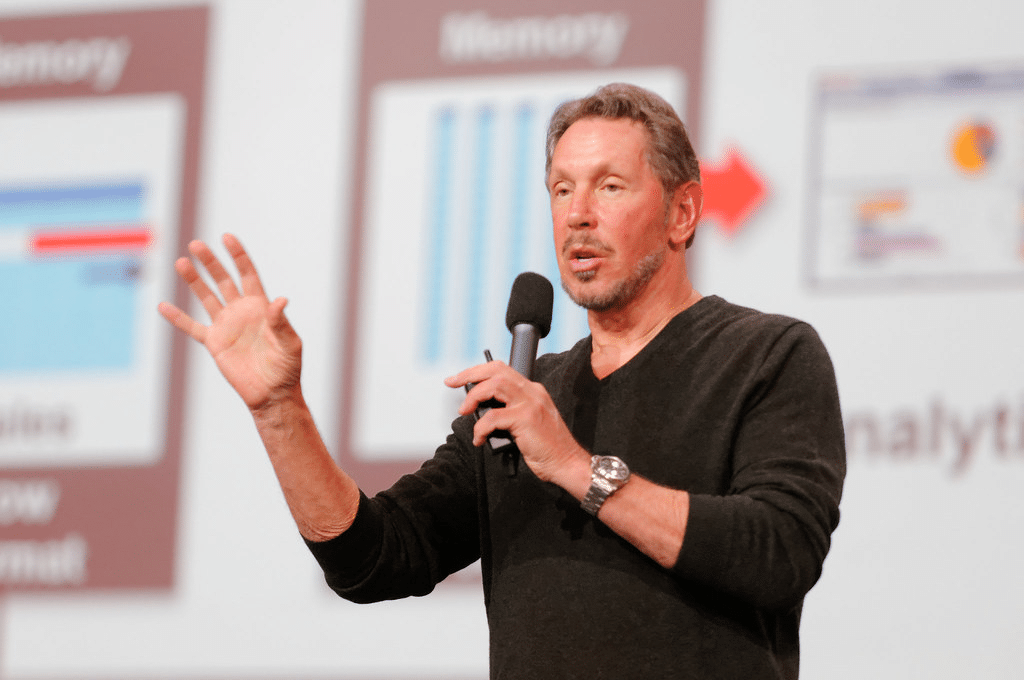
Oracle founder Larry Ellison, one of the most influential tech leaders in the world, recently shared a powerful explanation about two different types of Artificial Intelligence (AI) models that are shaping the future of technology. During his discussion, Ellison clearly differentiated between traditional AI models and low-latency AI intelligence, using Elon Musk’s Tesla as a real-world example.
This explanation is important because it helps people understand why some AI systems think slowly while others react instantly, just like a human reflex. According to Ellison, the future of AI depends not only on intelligence but also on speed, response time, and decision-making efficiency.
Key Highlights at a Glance
| Topic | Details |
|---|---|
| AI Models Explained | Two types of AI models |
| Key Concept | Low-latency intelligence |
| Example Used | Tesla Self-Driving AI |
| Industry Impact | Autonomous vehicles, robotics, defense |
| Expert | Oracle Founder Larry Ellison |
Understanding the First Type of AI Model: Large Centralized Intelligence
The first AI model explained by Larry Ellison is the centralized, high-compute AI model, which most people are already familiar with today. These models usually run on large cloud data centers and rely on massive computing power.
This type of AI is extremely intelligent and capable of:
- Complex data analysis
- Large language processing
- Predictive analytics
- Business intelligence and decision support
However, Ellison pointed out one major limitation — latency. Since these AI models depend on cloud servers, they need time to:
- Send data to the server
- Process information
- Send results back
Even a delay of milliseconds can be dangerous in real-time situations like self-driving cars or military systems.
Second Type of AI Model: Low-Latency Intelligence That Thinks Instantly
The second and more critical AI model, according to Larry Ellison, is low-latency AI intelligence. This type of AI operates closer to the device itself, often directly on hardware like cars, robots, or machines.
Low-latency AI is designed to:
- Process data locally
- Respond in real time
- Avoid dependence on cloud delays
- Make split-second decisions
Ellison emphasized that this kind of intelligence is essential where speed equals safety.
Why Elon Musk’s Tesla Is the Best Example of Low-Latency AI
To explain this concept clearly, Larry Ellison used Elon Musk’s Tesla as a perfect real-world example. Tesla vehicles rely on on-board AI systems rather than constant cloud communication.
AI model Tesla’s low-latency AI enables:
- Instant braking decisions
- Real-time object detection
- Immediate steering adjustments
- Human-like reflex actions
If a Tesla depended on cloud servers for every decision, even a small delay could cause accidents. That’s why Tesla’s AI processes data inside the car itself, making it one of the strongest examples of real-time intelligence in action.
Why Low-Latency AI Is the Future of Autonomous Technology
Larry Ellison believes that low-latency intelligence will dominate future technologies such as:
- AI model
- Self-driving vehicles
- Military defense systems
- Smart robotics
- Industrial automation
- Healthcare emergency systems
In these fields, AI must react instantly, not seconds later. This shift is pushing companies like Oracle to invest heavily in edge computing and AI infrastructure.
Oracle’s Vision for the Next Generation of AI Models
As the founder of Oracle, Ellison revealed that the company is focusing on building AI systems that combine:
- Centralized intelligence for deep analysis
- Low-latency intelligence for real-time execution
This hybrid approach allows businesses to enjoy both high intelligence and instant decision-making, a balance that will define the next era of AI development.
Conclusion: Why Larry Ellison’s AI Explanation Matters Today
Larry Ellison’s explanation makes it clear that AI is no longer just about intelligence, but about speed. While cloud-based AI remains powerful, low-latency intelligence like Tesla’s system is redefining safety, automation, and real-world usability.
As AI continues to evolve, companies that master real-time decision-making will lead the future. Ellison’s insights offer a roadmap for how technology giants, startups, and governments should think about AI going forward.
Frequently Asked Questions (FAQs
1. What are the two types of AI models explained by Larry Ellison?
Larry Ellison explained centralized cloud-based AI models and low-latency AI models that process data locally.
2. What is low-latency intelligence?
Low-latency intelligence refers to AI systems that respond instantly without relying on cloud processing delays.
3. Why did Larry Ellison mention Tesla?
Tesla uses on-board AI to make real-time driving decisions, making it a perfect example of low-latency AI.
4. Is low-latency AI better than cloud AI?
Both are important, but low-latency AI is critical for real-time applications like self-driving cars.
5. How is Oracle using this AI concept?
Oracle is building hybrid AI systems that combine deep cloud intelligence with fast edge-based processing.