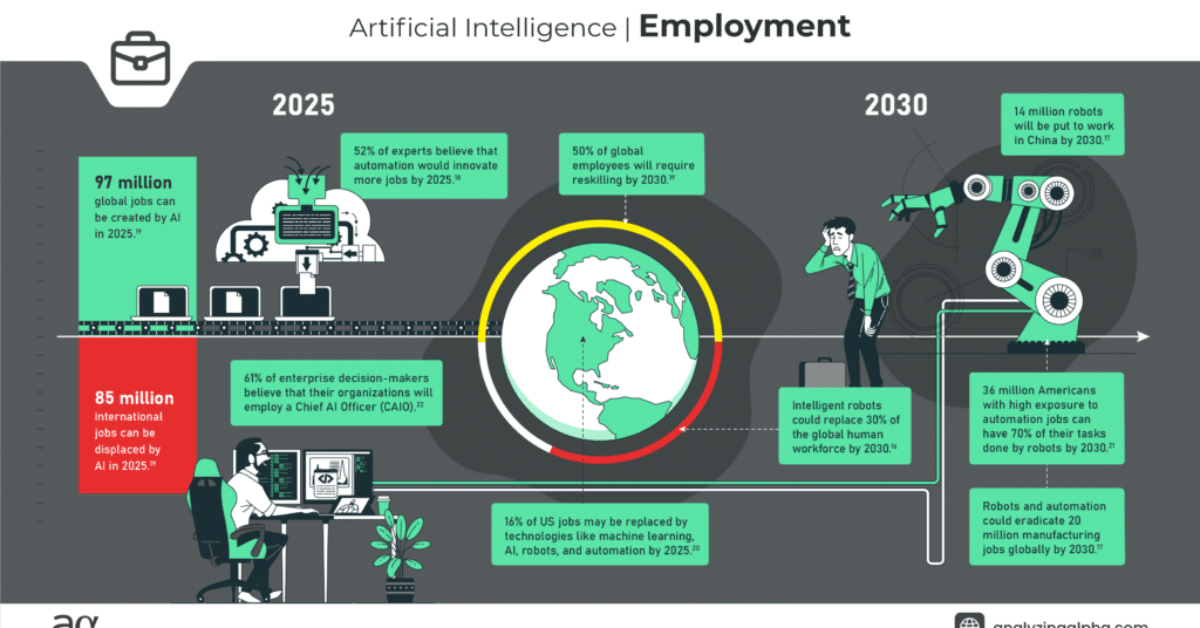
AI business reality is rapidly reshaping how global enterprises operate, make decisions, and compete, pushing leaders to rethink their enterprise AI strategy in 2025. As companies accelerate automation, reorganize workflows, and redefine leadership roles, executives face urgent questions about talent readiness, responsible AI frameworks, and long-term ROI.
This transformation cuts across every industry, from finance and retail to manufacturing and healthcare, making AI adoption challenges one of the most important leadership discussions of the decade.
Understanding AI business reality in the modern enterprise
The AI business reality facing leaders today goes far beyond simply using generative AI tools for productivity. Companies must navigate a complex shift that impacts data infrastructure, governance, workforce structure, and customer expectations.
Analysts note that while AI promises exponential value creation, most enterprises still struggle with issues such as fragmented data, unclear ownership, and a lack of skilled teams. A 2025 industry review found that fewer than 20% of organizations have scaled AI across three or more business functions.
For leaders, the core challenge is not technological—it is strategic. The new enterprise AI landscape demands long-term planning, strong governance, and a well-defined automation roadmap.
Why enterprise AI strategy is falling behind
Many organizations rushed into AI adoption without:
- a structured workflow redesign
- clear use-case prioritization
- data accountability policies
- risk and governance frameworks
Executives now realize that AI transformation is not an IT initiative but a company-wide reinvention. Without clear alignment between business objectives and the capabilities of AI, early deployments often lead to inconsistent outcomes, operational bottlenecks, or shadow-AI usage within teams.
Even more concerning: many enterprises underestimate the cultural shift required. Employees need training, leaders need new decision models, and governance teams must adapt to real-time AI-driven systems.
How automation is redefining the digital workforce
The rise of digital workforce technologies—AI agents, autonomous workflows, smart copilots—signals a major shift in how work gets done.
Key workforce changes emerging in 2025 include:
- automated decision support for managers
- AI assistants embedded in every department
- AI-enhanced customer service operations
- predictive forecasting in finance and supply chain
- hybrid teams combining human and machine workflows
This shift is accelerating efficiency but also requiring companies to rethink skill sets. Employees must understand how to monitor, validate, and collaborate with intelligent systems, making digital literacy an essential requirement for every department.
The growing importance of AI governance
As enterprises deploy more AI models, responsible use becomes a top priority. Strong AI governance now includes:
- bias monitoring
- transparent decision-making
- traceable data sources
- compliance with emerging regulations
- ethical AI guidelines
- continuous model evaluation
The global regulatory push—especially in the EU, US, and Asia—means leaders cannot delay governance frameworks. Instead of treating governance as a burdensome process, high-performing companies integrate it into their AI transformation playbook.
A clear governance policy also builds customer trust, especially in sectors involving finance, healthcare, and public services.
Why data maturity is the foundation of enterprise AI
Companies with fragmented, siloed, or incomplete data will struggle to scale AI. Leaders must now prioritize:
- unified data architecture
- real-time pipelines
- strong metadata management
- centralized access control
- cloud-native infrastructure
The truth is simple: AI decision-making is only as strong as the data it depends on.
Enterprises with mature data ecosystems are seeing much faster ROI from automation and generative tools. Meanwhile, data-poor organizations face unreliable outputs, cybersecurity risks, and model failures.
Strategic AI adoption: What top-performing enterprises do differently
Industry leaders who successfully operationalize AI share three common traits:
1. Clear, measurable use cases
Instead of experimenting randomly, they map automation to revenue, cost savings, and customer experience improvements.
2. AI-centered organizational structure
They appoint Chief AI Officers, build center-of-excellence teams, and redefine operational roles.
3. Investment in continuous workforce upskilling
They establish company-wide AI learning programs, ensuring employees stay aligned with the future of AI in business.
These practices do not eliminate risk, but they dramatically improve the success rate of deployments.
The road ahead: How leaders can navigate AI business reality
To stay competitive, enterprise leaders must accept one truth: AI-driven transformation is no longer optional. It defines market winners and laggards.
A practical, leader-focused roadmap includes:
- Treating AI as a long-term strategic investment
- Building strong data foundations
- Implementing agile, iterative AI models
- Training teams for hybrid human-AI collaboration
- Maintaining transparent governance
- Prioritizing customer-facing AI enhancements
Executives who adopt a proactive, structured approach will unlock breakthrough efficiency, stronger margins, and sustainable innovation.
Conclusion
As 2025 unfolds, enterprises that understand the true AI business reality—not the hype—will achieve long-term competitive advantage. By focusing on responsible adoption, robust data systems, and strategic planning, leaders can navigate the next phase of corporate evolution empowered by AI-driven insight and enterprise automation.
For more industry insights, visit our AI Industry News section