AI-based assessment in India is transforming education, but design choices will determine if it promotes equity in AI tools or widens gaps. Over 60% of higher education institutions now permit AI tools, raising questions on fairness in exams and grading. As higher education AI adoption surges, stakeholders must prioritize inclusive systems.
AI-based assessment in India Gains Momentum
India’s education sector sees rapid shift toward AI education assessment with tools handling millions of exams yearly via remote proctoring India. Platforms use facial recognition and behavior analysis to monitor 10 lakh students daily, cutting cheating by 90%. Yet, AI bias in exams emerges when algorithms favor urban English speakers over rural multilingual learners.
Remote proctoring India scales access but demands equitable design. Early adopters like IndiaAI.gov.in on remote proctoring highlight benefits, while experts warn of data privacy risks in diverse demographics. Institutions must train models on representative datasets to avoid disadvantaging underrepresented groups.
Equity in AI Tools: Core Design Challenges
Equity in AI tools hinges on addressing AI bias in exams through transparent algorithms. Poorly designed systems amplify inequalities, as seen when facial recognition fails on darker skin tones common in India. Developers advocate diverse training data, including regional languages and accents, to ensure AI fairness education.
Adaptive systems personalize tests, but without checks, they reinforce privilege. A recent EY-Parthenon FICCI report on HEI AI adoption notes 60%+ institutions allow AI, yet only half audit for bias. Personalized student assessment shines when calibrated for socioeconomic diversity.
- Language barriers: AI struggles with Hindi, Tamil dialects unless localized.
- Access gaps: Rural students lack stable internet for remote proctoring India.
- Data privacy: Consent varies across public-private institutions.
Automated Grading India: Balancing Speed and Fairness
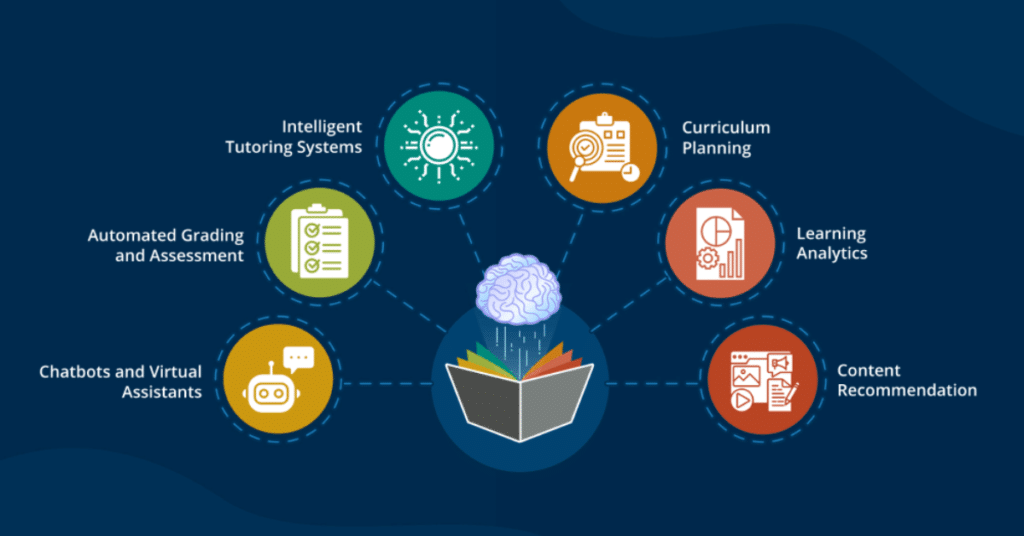
Automated grading India processes essays instantly, freeing teachers for mentorship. Tools score based on content, structure, and creativity, aiding scalability in massive open courses. However, AI fairness education requires human oversight to catch cultural nuances algorithms miss.
IIIT-Delhi AI exam model pilots “prompt disclosure,” where students reveal AI inputs for evaluation. This fosters transparency, blending adaptive learning platforms with accountability. Link to AI prompts for education for crafting ethical prompts.
Experts like Prof. Amit Sheth emphasize: “Design for inclusion from day one, or risk perpetuating divides.” Higher education AI adoption hits 65% in tech hubs, per recent surveys.
Adaptive Learning Platforms for Inclusive Future
Adaptive learning platforms tailor difficulty to student pace, boosting outcomes by 30% in pilots. In India, they integrate with Best AI tools for assessments, supporting gamified quizzes and real-time feedback. Success depends on bridging digital divides through subsidized devices.
Government pushes via AI automation in Indian business extend to edtech, funding bias audits. Yet, challenges persist: only 40% of platforms use India-specific data. Check AI news on education equity for policy updates.
Remote proctoring India evolves with hybrid models, combining AI flags and human review. Developers prioritize explainable AI, where graders see decision logic.
Overcoming AI Bias in Exams Through Policy
Policymakers eye regulations mandating equity audits for AI education assessment tools. NITI Aayog’s strategy calls for ethical frameworks, aligning with global standards. Institutions adopting Oracle founder Larry Ellison reveals 2 powerful types of AI models gain edge in scalable, fair systems.
Automated grading India thrives when paired with teacher training. Pilots show 25% retention gains in underserved areas via personalized student assessment.
- Inclusive datasets: Mandate 50% rural representation.
- Bias testing: Annual audits with third-party validation.
- Open-source models: Accelerate community fixes for AI fairness education.
Path Forward for Higher Education AI Adoption
Design choices today define tomorrow’s education landscape. Prioritizing equity in AI tools ensures AI-based assessment in India uplifts all students. Stakeholders must collaborate on standards blending innovation with justice.
Adaptive learning platforms hold promise, but only with vigilant oversight. As adoption grows, India leads global AI fairness education.