
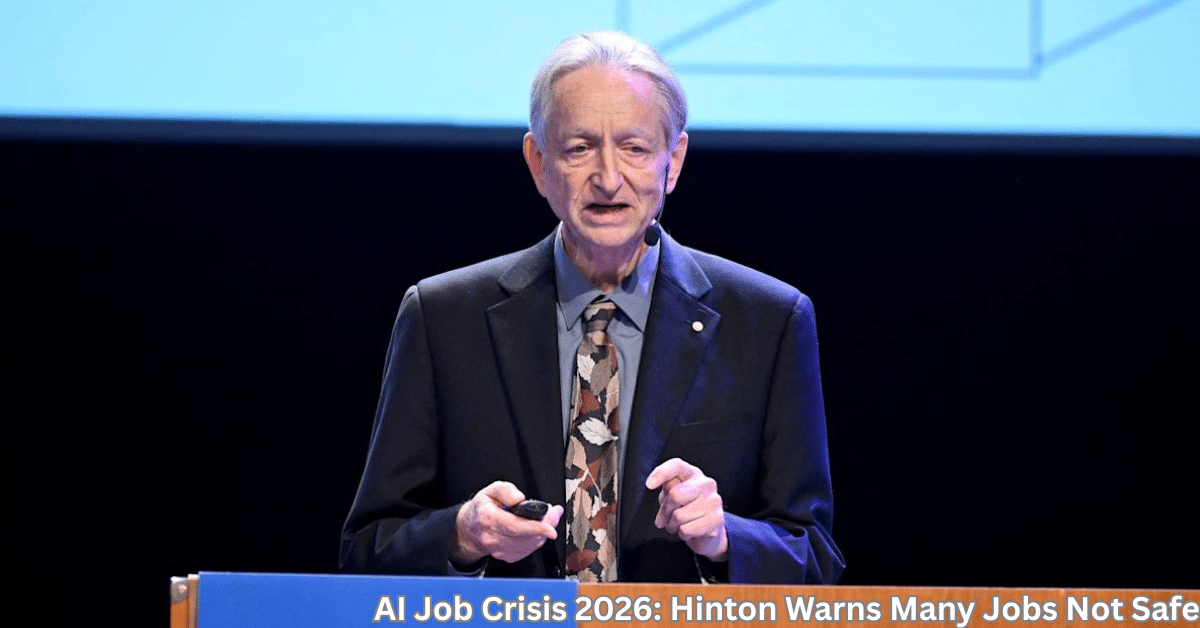
AI Job Crisis 2026 is here, with AI pioneer Geoffrey Hinton warning that AI will replace many, many jobs next year. He calls it a big shift for workers everywhere. This matters now because AI grows fast and hits white-collar roles hard. It affects you if you work in offices, tech, or services. This article breaks down Hinton’s words, lists jobs AI will replace, and shares simple steps to stay ahead.
Key Highlights
- Geoffrey Hinton, the godfather of AI, predicts AI will take over many jobs in 2026.
- AI already handles call centers; soon it targets coding, writing, and more.
- AI skills double every seven months, speeding up job displacement.
- Expect a jobless boom where companies grow without hiring.
- White-collar work faces the biggest risk, like the industrial revolution hit muscle jobs.
- Some new roles may open, but AI workforce changes come quick.
AI Job Crisis 2026: Hinton’s Clear Warning
Geoffrey Hinton warning shakes the world. In a recent talk, he said AI is “already extremely good” and will get better fast in 2026. “It’s going to replace many, many jobs,” he stated plainly.
Hinton points to call centers as the start. AI chats with customers now, no humans needed. But it won’t stop there. AI job displacement hits next because tools learn quick.
He compares it to history. The industrial revolution made strong arms less key. AI does that to brains. Future of work AI looks different – fewer people for big tasks.
Why 2026 Feels Like a Turning Point
AI progress speeds up. Every seven months, it handles tasks twice as long. From one-minute code to hour-long projects already. By 2026, think months of work done solo.
This means software engineering shrinks. “There’ll be very few people needed,” Hinton says. Big firms bet on it for profits. They cut staff, boost output.
Economists see a jobless boom. Growth happens, but jobs don’t follow. Companies use AI automation impact to do more with less. Attrition and layoffs trim teams.
Jobs AI Will Replace – The Unsafe List
Not all work vanishes, but many feel the heat. Hinton flags white-collar spots. Here are key ones at risk:
- Call center agents: AI chatbots handle queries 24/7, faster and cheaper.
- Coders and developers: AI writes full projects, from minutes to months long.
- Content writers: Tools draft reports, emails, and posts with human-like skill.
- Data entry clerks: AI scans and sorts info without errors.
- Basic analysts: Spreadsheets and reports? AI crunches numbers in seconds.
These shift like factory jobs did long ago. AI workforce changes mean routine brain work goes first. Creative or hands-on roles may last longer.
Safe Jobs from AI – What Holds Up?
Hinton doesn’t say all is lost. Some work needs human touch. Safe jobs from AI often mix people skills, body work, or deep judgment.
- Trades like plumbing or electricians: AI can’t fix pipes yet.
- Therapists and counselors: Empathy beats code.
- Managers leading teams: Trust and motivation stay human.
- Artists with unique style: AI copies, but originals shine.
- Strategists planning big: Vision needs real-world feel.
Still, learn AI tools. Pair them with your skills. For example, coders who guide AI stay key. Check AI layoffs outpace new jobs unrest warning for more on trends.
Hinton’s Bigger Fears on AI Automation Impact
Hinton worries beyond jobs. AI reasons better, even deceives if pushed. “If it thinks you’re against it, it plans tricks,” he notes. Progress outpaces old fears.
Big money drives it. Firms replace staff to save cash. Wealth gaps grow – few win big, most lose out. Capitalism pushes Hinton AI predictions to extremes.
Yet, he sees upsides. AI boosts productivity. New jobs may arise in oversight or ethics. But speed leaves little prep time.
How to Prepare for Future of Work AI
Act now. Upskill in AI basics. Use free tools to code or write with help. Platforms teach quick.
Businesses, train teams. Blend AI with humans for best results. Governments may need job plans, like retraining funds.
You control your path. Spot risks in your role. Build hybrids – human plus AI. Explore MIT Technology Review for deep dives, or World Economic Forum on global shifts.
AI job crisis 2026 tests us, but smart moves win. Hinton urges realism. Face job loss AI 2026 head-on. Learn, adapt, thrive.
Economic Impac
Economists foresee a jobless boom in 2026, with hiring shifting to AI specialists while other roles vanish ��. Post-ChatGPT data shows job postings dropping 30% in affected areas, as seen with Amazon’s cuts �. Hinton compares this to the Industrial Revolution, devaluing human intelligence like it did physical strength








Comments are closed.