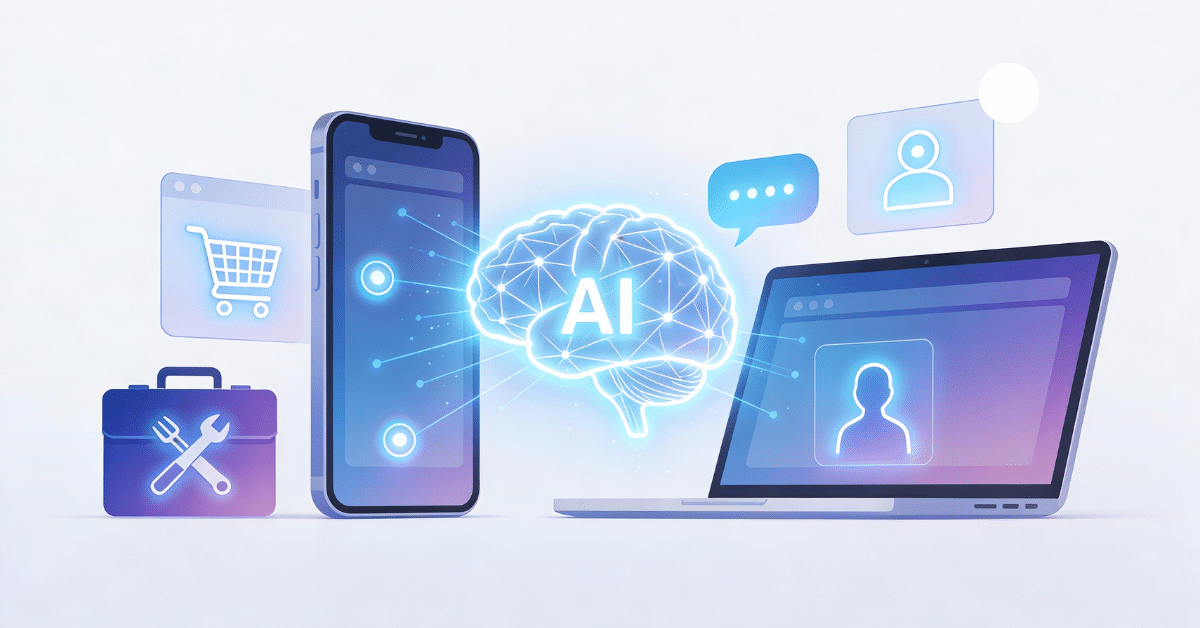
AI moves beyond chatbots as it quietly shifts from simple chat windows into the everyday tools, apps, and devices you already use.
Instead of being just a talking box on a website, AI is now powering search, documents, cameras, shopping, and creative tools, turning them into something far more interactive and intelligent.
This new wave of mass‑market AI innovation is changing how you work, learn, and make decisions—even if you never open a chatbot on purpose.
Key Highlights
- AI moves beyond chatbots and becomes an invisible layer inside everyday apps and services, not just a chat window on a support page.
- Generative AI experiences and AI-powered assistants and co‑pilots are now built into productivity tools, browsers, and phones you already use.
- Agentic AI and autonomous agents start handling multi‑step tasks in the background, from summarizing work to managing shopping and recommendations.
- New consumer AI products 2025 turn phones, PCs, and online platforms into AI productivity tools for work and creativity.
- This shift brings real opportunities in AI-powered personalization at scale, but also raises fresh questions around control, skills, and AI adoption and ROI for users and businesses.
Why This Shift Matters Now
The story today is bigger than chatbots because AI is moving into the mainstream, turning routine digital actions into generative AI experiences that feel much smarter than before.
As large models become cheaper and more efficient, companies are embedding multimodal AI in everyday apps, combining text, images, audio, and even video into fluid, natural interactions.
For you, that means the tools you already rely on for work, shopping, and entertainment will feel more like AI-powered assistants and co‑pilots, changing expectations for speed, quality, and personalization.
From Chat Windows to Everyday Experiences
The first wave of AI in business was dominated by chatbots, mostly answering FAQs or routing support tickets in a chat window.
Now AI moves beyond chatbots by slipping into the interfaces you already know—search bars, side panels in documents, command menus in email, and even the camera app on your phone.
As platforms tighten rules and Meta bans AI chatbots on WhatsApp Business, it becomes even clearer that the future is not just about standalone bots but integrated intelligence across channels.
Instead of typing into a separate bot, you can ask an AI co‑pilot to summarize a long report, draft an email, or pull key numbers directly inside your workspace.
On consumer platforms, you might see AI-driven customer experience features such as smart replies, auto-tagged photos, or instant content suggestions that feel like a natural extension of the product, not a separate AI tool.
These changes make AI beyond chatbots use cases feel less experimental and more like the default way modern apps behave.
The New Engines of Mass‑Market AI

Under the hood, this shift is powered by a new stack of generative AI experiences, multimodal AI in everyday apps, and emerging agentic AI and autonomous agents.
Generative models can write, summarize, translate, and create images or simple videos, making “create” buttons much more powerful inside existing software.
Multimodal systems interpret text, visuals, and audio together, enabling features like describing what is in a photo, translating signs on the fly, or extracting information from PDFs and screenshots.
At the same time, early agentic AI systems move from answering questions to completing tasks end‑to‑end, such as scheduling, drafting workflows, or coordinating multiple tools on your behalf.
“The major shift is that AI is quietly moving from chat windows into the everyday tools people already use—turning ‘smart features’ into full AI experiences.”
— AI Core News Research Team
This is where AI beyond chatbots use cases becomes truly interesting: the intelligence is no longer a destination, it is the default layer inside your digital life.
Real-World Use Cases You’ll Actually Feel
Smarter Shopping and Recommendations
In retail and ecommerce, AI in retail and ecommerce is moving from static recommendations to dynamic, context-aware helpers.
You might get more accurate product suggestions based on your behavior, real‑time availability, and even predicted needs, driven by AI-powered personalization at scale instead of simple rules.
AI‑enhanced assistants can help you compare options, calculate total costs, or even suggest bundles automatically, making AI-driven customer experience feel more like a trusted guide than a script.
As AI adoption and ROI become measurable, retailers roll out more of these invisible agents to keep you engaged and spending less time searching.
AI Co‑Pilots at Work
In the workplace, AI productivity tools for work are rapidly becoming standard sidekicks inside email, documents, spreadsheets, and project tools.
These AI-powered assistants and co‑pilots can summarize meetings, highlight risks in contracts, draft reports, and surface insights from large datasets with a single prompt or click.
For knowledge workers, this reduces the time spent on repetitive tasks and lets you focus on higher‑value thinking and decision‑making.
The real business value of AI emerges when teams redesign workflows around these co‑pilots instead of treating them as occasional helpers.
Creative Tools for Everyone
On the creative side, future of consumer AI is already visible in tools that let you generate images, music, or video ideas from simple text prompts.
These generative AI experiences lower the barrier for non‑experts, making it easier to prototype designs, social posts, or storyboards without starting from a blank page.
As these features are integrated into mainstream apps, you no longer need separate AI platforms; they are simply part of your existing creative toolkit.
For creators and small teams, this can unlock new formats and faster experimentation, but it also demands a sharper eye for originality and quality.
Opportunities and Risks in the New AI Normal
The upside of AI moves beyond chatbots is a step‑change in convenience, personalization, and productivity, especially when mass-market AI innovation brings advanced capabilities to non‑technical users.
You can get more done in less time, automate routine tasks, and lean on consumer AI products 2025 to explore ideas that would have taken hours before.
However, there are trade‑offs: over‑reliance on automation can dull critical thinking, while misused agentic AI and autonomous agents might act on incomplete or biased data.
There are also concerns around privacy, data ownership, and how much of your workflow should be visible to these systems if you want a positive AI adoption and ROI story in the long term.
What It Means for Users, Creators, and Businesses
For everyday users, the main change is that you will interact with AI beyond chatbots use cases without seeking them out, as your favorite apps quietly add smarter features.
Learning how to prompt clearly, review outputs critically, and keep control over what you automate will become a core digital skill.
For creators and freelancers, embedded AI productivity tools for work can amplify output and experimentation, but differentiation will depend on taste, strategy, and niche expertise.
For professionals concerned about their roles, it is crucial to understand how AI will transform careers in 2026 and beyond, and to upskill in ways that complement these tools rather than compete with them.
Businesses that embrace mass-market AI innovation thoughtfully—integrating AI into products, workflows, and customer journeys—are more likely to see sustained value rather than hype-driven experiments.
As some platforms tighten rules and others experiment with new models after moves like Meta bans AI chatbots on WhatsApp Business, strategic choices around where and how to deploy AI will matter even more.
As AI continues to spread, the question is no longer whether you will use it, but how intentionally you will shape your relationship with these tools.
With AI moves beyond chatbots and into every corner of digital life, what will you change first in your own workflow or business to stay ahead of this new wave of AI-powered experiences?