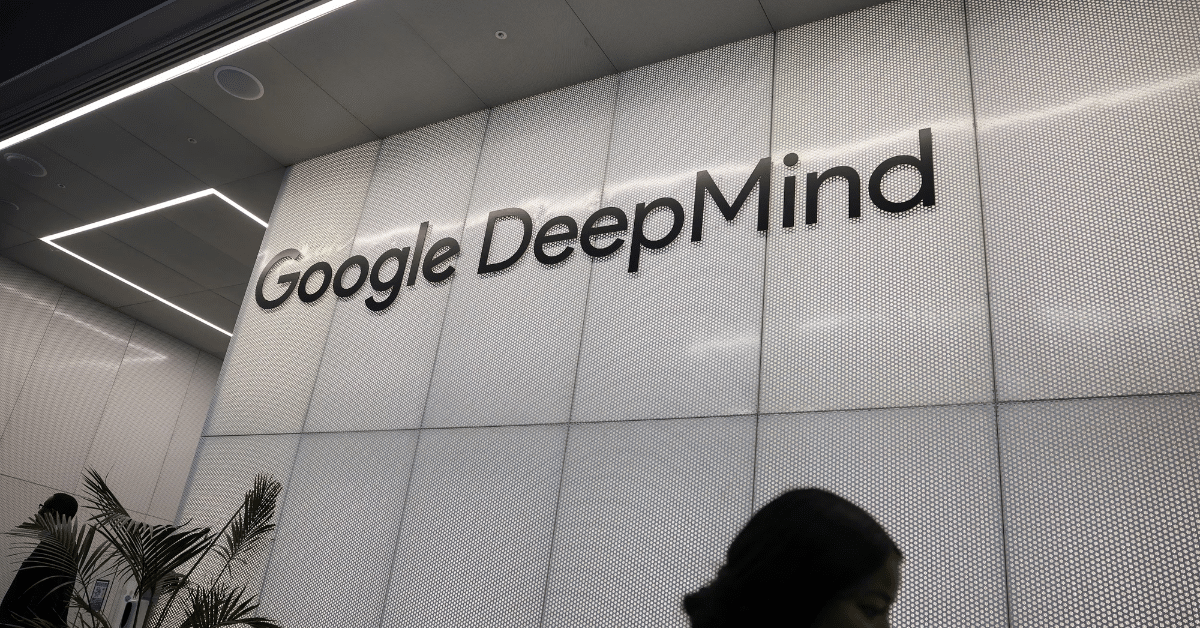
Google DeepMind new AI research lab UK marks a bold expansion in AI materials science, partnering with the government to automate scientific discovery. Announced on December 11, 2025, the DeepMind automated research lab will open in 2026, focusing on fusion energy research and superconductor materials discovery through robotics AI experiments.
This initiative deepens the UK AI government partnership, leveraging Gemini AI integration to run continuous experiments beyond human capacity. Located in the UK, the facility aims to tackle complex challenges like sustainable energy via AI-driven innovation.
Google DeepMind New AI Research Lab UK: Core Features
The Google DeepMind new AI research lab UK introduces fully automated workflows where robots handle sample preparation, testing, and analysis 24/7. DeepMind automated research lab uses advanced sensors and Gemini AI integration to predict material properties, accelerating discoveries in AI materials science that could transform industries.
Key capabilities include high-throughput experimentation for superconductor materials discovery, targeting room-temperature superconductors for energy efficiency. Demis Hassabis, DeepMind CEO, emphasized: “This lab embodies our vision for AI as a partner in science, scaling human ingenuity.”
- Robotic arms synthesize thousands of material samples daily
- Real-time data analysis via Gemini AI integration refines hypotheses instantly
- Integration with NVIDIA AI chip tracking software for compute optimization
UK AI Government Partnership Drives Innovation
Expanding the collaboration with the UK AI security institute, the lab aligns with national strategies for AI scientific breakthroughs. Funding supports fusion energy research, aiming to model plasma behaviors unattainable manually. This positions the UK as a global leader in responsible AI deployment.
Robotics AI experiments will prioritize safe, ethical applications, with oversight from government bodies. Early focus areas include battery materials and quantum computing substrates, promising economic boosts through tech exports.
Experts note the lab’s potential to cut research timelines from years to months. As one analyst stated, “DeepMind’s approach redefines lab automation, blending AI materials science with physical experimentation seamlessly.”
Strategic Impact on AI Industry
The DeepMind automated research lab sets a precedent for hybrid AI-human workflows, influencing global R&D. Fusion energy research could unlock clean power, while superconductor materials discovery enables faster computing—vital for AI scaling.
Demis Hassabis quotes highlight scalability: “AI will automate the tedious, letting scientists chase bold ideas.” Partnerships extend to universities, fostering talent in UK AI government partnership ecosystems. For more on AI compute, check Gemini AI tools guide.
| Lab Focus Area | AI Role | Expected Outcomes |
|---|---|---|
| Superconductor materials discovery | Predictive modeling via Gemini | Room-temp superconductors DeepMind official blog |
| Fusion energy research | Plasma simulation | Viable fusion reactors |
| Robotics AI experiments | Autonomous testing | 10x faster material screening |
| AI materials science | Data synthesis | New battery chemistries |
Future Roadmap and Global Implications
Opening in 2026, the facility will evolve with AI scientific breakthroughs, incorporating feedback loops for self-improving experiments. This aligns with aicorenews.com’s coverage of AI business and automation, from tools to industry shifts.
The UK AI security institute ensures ethical guardrails, addressing risks in autonomous labs. Broader impacts include job creation in AI ops and inspiring similar hubs worldwide. Explore related trends in AI automation news.