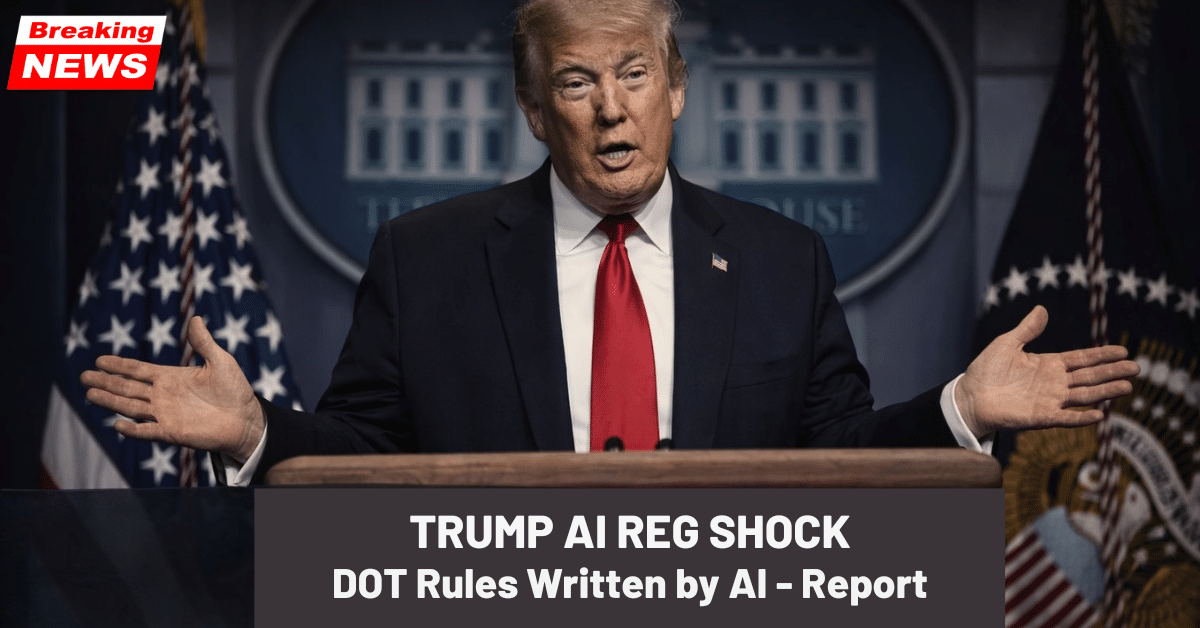
A stunning report from The Information exposes the incoming Trump administration’s bold push into Trump AI transportation regulations. Internal documents reveal plans to deploy advanced AI for drafting federal transportation rules, targeting everything from highway safety to electric vehicles (EVs) and self-driving tech in a $2 trillion industry.
This move promises to slash bureaucracy and speed up approvals amid Elon Musk-led efficiency drives. But it ignites debates over AI errors in safety-critical areas, where a single flaw could impact millions on U.S. roads.
Trump’s team views AI drafting DOT rules as essential, especially with proposed 20% staff cuts at the Department of Transportation (DOT). The timing aligns perfectly: Trump’s term kicks off soon, piling pressure on innovation in federal transport AI.
Bombshell Report Details
The scoop broke on January 26, 2026, drawing from Trump transition memos and insider sources. Advanced large language models (LLMs) would scan existing laws, public comments, and vast datasets to generate regulation drafts. Human experts would refine them before final approval.
Key targets include emissions standards, autonomous trucks, and highway funding allocations. This ties directly into Trump’s “Government Efficiency” initiative, spearheaded by Musk and Vivek Ramaswamy, aiming to dismantle red tape.
Unlike Biden-era pilots that tested govt AI rulemaking on a small scale, Trump’s approach mandates broader AI use starting in Q1 2027—post-executive orders. No specific AI vendor is named yet; competitive bids are required.
Key Takeaways from the Leak
- Internal docs confirm scope: AI to handle vehicle safety standards and emissions rules across DOT agencies.
- Trump priority alignment: Part of the efficiency push to cut bureaucracy and boost U.S. competitiveness.
- Builds on precedents: Expands Biden’s light-touch AI experiments into mandatory, large-scale operations.
- Global race factor: Counters China’s rapid AI permitting for infrastructure, EVs, and drones.
- Flagged risks: Potential for bias, legal gaps, or hallucinations in AI-generated outputs.
These points underscore how Trump DOT automation could transform rulemaking, but not without hurdles.
Big Picture: AI’s Government Takeover Accelerates
This fits a larger trend of AI infiltrating public sector tasks, much like how it’s hitting jobs from therapists to factories. Biden dipped a toe with voluntary AI pilots; Trump dives in headfirst.
On the private side, companies like Tesla and Waymo already use AI to simulate regulatory compliance for robotaxis and autonomous fleets. Yet, China’s AI edge in fast-tracking EV mandates and drone approvals forces the U.S. to accelerate autonomous regs AI.
DOT’s workload is exploding—staff reductions mean AI must fill the void for handling complex rules on EVs, logistics, and infrastructure.
Who Gets Hit – And How
Trump AI transportation regulations will ripple across sectors:
Autos and Logistics Winners: Faster approvals for robotaxis, EV fleets, and autonomous trucks benefit giants like UPS, FedEx, Tesla, and Waymo. Quicker federal transport AI greenlights could unlock billions in deployments.
Regulators’ Shift: Jobs evolve from drafting to AI oversight. Drafting timelines could plummet, easing backlogs but demanding new skills in model validation.
Public and Safety Groups’ Concerns: Critics fear AI overlooks nuanced crash data or safety subtleties, potentially clogging courts with challenges. Human judgment remains irreplaceable for life-or-death rules.
Developers and Lawyers’ Opportunities: Demand surges for AI-audit tools and traceable models. Legal experts gear up for AI bias regulations scrutiny.
Ripple Effects: Eyes turn to FDA drug approvals or IRS tax codes next. This reshapes AI development toward government-compliant, auditable systems.
Road Ahead: Speed vs. Safety Clash
Expect DOT leadership appointments by February 2027, followed by pilot launches. The Administrative Procedure Act (APA) requires public input periods, opening doors for feedback.
Congress may probe AI accuracy, with truckers and industry groups offering data collaborations. Lawsuits over the legality of AI-drafted rules loom large, testing if machines can meet constitutional standards.
Ultimately, this pits bureaucratic speed against transportation safety in a high-stakes showdown. Will Trump efficiency AI deliver leaner government, or expose roads to unchecked risks?
As the U.S. races China in AI-driven infra, stakeholders watch closely. Stay tuned for updates on bids, executive orders, and first AI-generated regs.