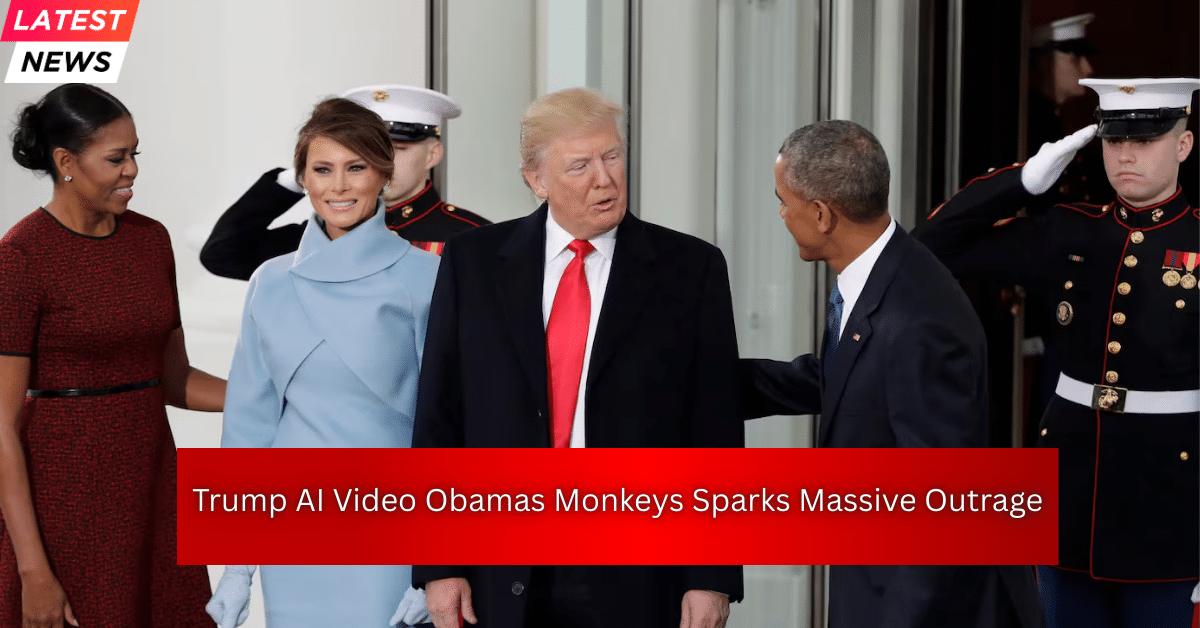
Trump AI video Obamas monkeys has ignited a firestorm across social media and politics. The clip shows former President Barack Obama and Michelle Obama with faces placed on monkey bodies.This event matters because it highlights how easy it is to create harmful AI-generated videos today. It affects everyone who uses social platforms, as such content can spread lies and hate fast. This article breaks down what happened, the backlash, and what it means for AI ethics in politics.
Key Summary
- President Donald Trump shared the video on Truth Social late Thursday night, February 5, 2026.
- The 62-second clip pushes 2020 election fraud claims and ends with the Obamas as apes set to “The Lion Sleeps Tonight.”
- Democrats called it deeply racist, linking it to old stereotypes that hurt Black people.
- The post was deleted after about 12 hours, with the White House blaming a staff error.
- Trump has shared other AI deepfakes before, like Obama in jail or jets dumping waste on foes.
- This raises big questions about political AI misuse on platforms like Truth Social.
What the Trump AI Video Obamas Monkeys Shows
The video starts with claims about rigged Dominion Voting Systems in the 2020 election. It talks about vote counts flipping to Joe Biden in states like Georgia. Then, it shifts to a short AI-generated part that shocks viewers.
In that clip, Barack and Michelle Obama’s faces appear on ape bodies for about one second. The full version from the original creator shows Trump as a mighty lion, while Democrats like Hillary Clinton, Kamala Harris, and others turn into animals too – donkeys, turtles, chimps. This style recalls Disney’s The Lion King but uses it to mock rivals.
Truth Social post went viral before removal. Screenshots spread on X, Reddit, and Instagram, fueling the debate. Users noted the watermark from the X account that made it, proving it’s not Trump’s original work.
Democrats Backlash and White House Response
Democrats reacted with fury right away. Party leaders labeled the imagery “disgusting” and “the most racist thing” they had seen lately. They tied it to Trump’s past comments and said it dehumanizes the Obamas.
One lawmaker said it revives ugly tropes used against Black leaders for years. Social media exploded with social media outrage, from everyday users to big influencers. Hashtags like #TrumpRacistAI trended worldwide.
The White House first dismissed it as “fake outrage.” Later, they said a staffer posted it by mistake and took it down. Trump himself claimed he “didn’t see” that part of the video. No apology came, even as pressure grew.
Ties to Election Conspiracy Claims
This isn’t just about images – it’s part of bigger election conspiracy claims. The video revives talk of stolen 2020 votes, a topic Trump pushes often since his 2024 reelection. Dominion Voting Systems gets named again, despite court losses for those claims.
AI makes these stories hit harder. A simple tool can splice faces onto anything in seconds, making fake proof look real. For users like you, who follow AI tools for work or fun, this shows the dark side.
AI deepfake dangers can trick millions before platforms act. Check out how nations like the US and China handle AI warfare risks in politics at US-China AI warfare pledge.
Why AI-Generated Video Tech Enables This
Tools to make these clips are free and user-friendly now. Anyone can upload photos and generate videos in minutes. Trump has leaned into this since last year, sharing AI mocks of foes.
Past examples include Obama “arrested” in the Oval Office or in an orange jumpsuit. Another showed fighter jets dropping waste on protesters – made by the same creator. These posts rally his base but spark fights.
For AI business folks, this is a wake-up call. Platforms must add better checks, like watermarks or fact tags. Governments talk rules, but tech races ahead.
Broader Political AI Deepfake Worries
This case spotlights risks in elections worldwide. Racist imagery via AI isn’t new, but presidents sharing it grabs attention. It divides people and erodes trust in media.
Experts warn deepfakes could sway votes or start unrest. Imagine voters seeing fake leaders saying wild things days before polls. Your content creation work on aicorenews.com needs to flag these trends.
See Times of India coverage for global views. Or News18 report on the fury.
Impact on Social Platforms
Truth Social faces heat for hosting it first. Other sites like X amplified it fast. White House response pushes for quicker takedowns.
Users demand tools to spot AI fakes. Apps now scan videos for edits, but they’re not perfect yet.
What Users Can Do
Spot these by checking sources and watermarks. Share less, verify more. Tools like reverse image search help.
Lessons for AI Ethics and Future Rules
This pushes calls for laws on political AI. The US eyes bans on deepfakes near elections. Europe already has strict AI acts.
For creators like you in Indore, blending AI with SEO means ethics matter. Build trust with real facts amid fakes.
Social media outrage will fade, but the lesson sticks: AI power needs guardrails. Platforms, leaders, and users must team up.