US China skip AI warfare pledge at a key global summit. This move highlights deep splits in how nations handle AI arms race.This news matters because AI is changing modern wars fast. It affects everyone from tech users to world leaders. You will learn the facts, reasons, and next steps in this simple guide.
Key Summary
- At REAIM summit in Spain, only 35 of 85 countries signed a military AI declaration.
- US and China did not join, unlike past events where US took part.
- The pledge covers 20 rules like human control over autonomous weapons and risk assessments AI.
- This creates a global AI divide as big powers focus on their own AI governance warfare.
- Tensions with allies and rivals fuel the prisoner’s dilemma AI, where no one wants to fall behind.
- Rapid AI growth raises fears of accidents in battles.
US China Skip AI Warfare Pledge at REAIM Summit
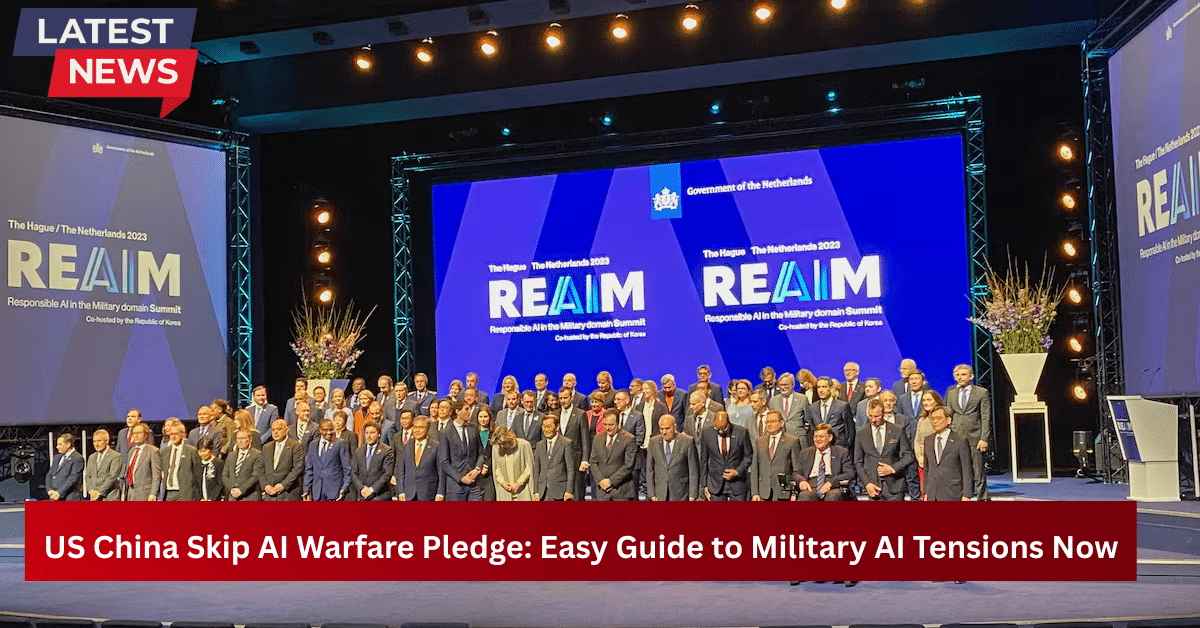
The REAIM summit happened in A Coruna, Spain, on February 5, 2026. It brought 85 nations to talk responsible AI military use. But US China skip AI warfare pledge shocked many.
Past summits in The Hague (2023) and Seoul (2024) saw more buy-in. About 60 countries, including the US, backed a basic plan then. China stayed out both times. Now, even the US stepped back, showing bigger geopolitical tensions AI.
Why now? Leaders worry AI moves too fast for rules. Drones with AI already fight in places like Ukraine. Nations fear losing edge in AI arms race. This makes trust hard.
What the Military AI Declaration Says
The unsigned pledge lists 20 clear principles. It stresses humans must stay in charge of AI weapons. No full machine takeovers.
Key points include:
- Clear chains of command for AI tools.
- Share oversight info if it fits national security.
- Train troops well on AI systems.
- Do strong tests and risk assessments AI before use.
These aim to cut mistakes, like wrong targets or escalations. But without big players like US and China, it feels weak. Smaller nations signed, but they lack the tech power.
Reasons Behind US and China Opting Out
US faces its own issues. Ties with Europe feel shaky amid policy shifts. Some allies hesitate too, fearing geopolitical tensions AI lock them in.
China pushes its AI fast for defense. It sees Western rules as a way to slow them down. Russia also skips, racing ahead on autonomous weapons.
This is a classic prisoner’s dilemma AI. If one side agrees to limits, the other gains advantage. No one blinks first. Experts say this speeds the global AI divide.
For you, this means AI tools in daily life might face new rules soon. Think self-driving cars or smart security – military tests them first.
Global AI Divide Deepens Fast
The split shows no easy fix. Only a third of summit nations agreed. That’s down from prior years.
| Aspect | Signers (35 nations) | Non-Signers (US, China, others) |
|---|---|---|
| Focus | Responsible AI military rules | Build AI power quick |
| Risk View | High worry on accidents | National security first |
| Past Action | Joined earlier plans | Often stayed out |
| Impact | Share best practices | Lead AI arms race |
This table shows the clear split. Signers want talks; others want action.
REAIM summit hosts like Netherlands and UK push for more. But without US and China, progress stalls. Watch for next meets.
AI Arms Race: Real World Effects
AI changes war tools now. Drones spot enemies alone. Missiles pick targets with AI brains.
Without pledges, risks grow:
- Misreads lead to fights no one wants.
- Autonomous weapons spread to bad groups.
- Cyber AI attacks hit faster.
For businesses, this boosts defense AI spending. Check US software stocks stabilize for market links. Tech firms win big.
Users like you see it in news. AI ethics matter more. It shapes tools we use daily.
Leaders note speed is key. One expert said rapid China and Russia moves force others to match. Both build and regulate must go together.
What Comes Next for AI Governance Warfare
No binding laws yet. This pledge was voluntary. But it sets a tone.
US might make its own rules. China builds “safe” AI for war. Europe pushes human rights focus.
Prisoner’s dilemma AI could lead to talks or worse races. Nations eye UN or new summits.
For India and others, pick sides wisely. Balance growth and safety.
How This Affects You and Tech World
AI isn’t just for armies. It powers your phone, car, job tools. Military pushes make civilian AI better – or riskier.
Stay safe: Use trusted AI apps. Watch Reuters AI military update for facts.
Businesses face export rules on AI chips. This hits global supply.