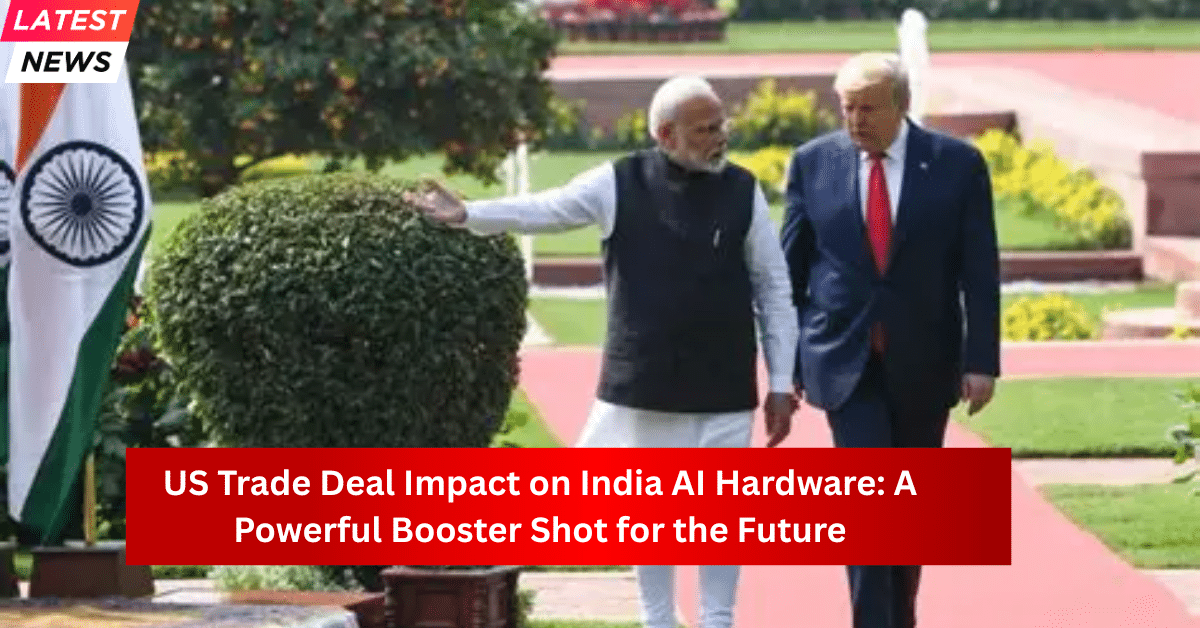
US trade deal impact on India AI hardware is becoming a major talking point as new trade moves between the two countries begin to reshape how AI machines, chips, and systems are built and supplied. This deal is not just about trade numbers. It directly affects how India grows its AI hardware strength in the global market.
Why this matters right now
AI is no longer only about software. Real progress depends on chips, servers, GPUs, and advanced hardware. The US trade deal opens doors that can speed up India’s AI hardware ecosystem, reduce risks, and bring long-term growth for users, startups, and businesses.
Key Summary
- The US trade deal supports India’s AI hardware ecosystem growth
- Easier access to advanced chips and AI infrastructure
- Strong push for semiconductor and AI chip manufacturing
- Boost for Indian hardware startups and supply chains
- Helps reduce dependence on a single global supplier
- Positions India as a long-term AI hardware partner
US Trade Deal Impact on India AI Hardware Ecosystem
The US trade deal impact on India AI hardware can be seen in how supply chains are becoming more open and stable. India needs reliable access to high-performance chips to build AI tools at scale. The deal improves trust, trade flow, and cooperation in this area.
For Indian companies, this means fewer delays and better planning. For users, it means faster AI products and services in daily life.
How the Deal Strengthens AI Chip Manufacturing in India
Better access to advanced chips
AI systems depend on GPU and accelerator chips. With stronger US ties, Indian firms can access better hardware faster. This helps data centers, AI labs, and cloud providers grow without long waits.
Support for local production
The deal also supports Make in India for AI goals. Global firms are more open to setting up or expanding chip-related work in India. This improves skills, jobs, and local know-how.
Stronger semiconductor supply chain
A stable semiconductor supply chain reduces risk. India benefits by not relying on one country or one route. This balance is critical for long-term AI infrastructure growth.
What This Means for Indian AI Startups and Builders
Lower entry barriers
Hardware costs are a big problem for startups. Better trade terms can reduce costs and improve access. This allows hardware startups in India to test, build, and scale faster.
Faster innovation cycles
When hardware is easier to get, teams can move faster. AI models improve quickly when testing is not delayed by chip shortages.
More global trust
Global partners prefer stable regions. The US India technology partnership increases trust in Indian AI hardware projects.
Impact on the Global AI Hardware Market
India is no longer just a buyer. It is becoming a builder and partner. As the global AI hardware market grows, countries want reliable partners who can scale fast and safely.
This deal helps India:
- Gain a stronger voice in AI hardware planning
- Attract long-term investment
- Build AI systems for global use, not just local needs
Real-World Effects You Will Notice
If you are a user, business owner, or developer, the impact shows up in daily life:
- Faster AI tools and platforms
- More stable AI services
- Better pricing over time
- Growth of local AI products
This is how policy turns into real value.
India’s AI Infrastructure Growth Gets a Long-Term Push
AI infrastructure growth depends on power, cooling, chips, and networks. The trade deal supports all of these by improving hardware flow and planning.
Data centers can expand faster. Research labs can test bigger models. Enterprises can deploy AI without fear of sudden shortages.
Helpful External Context (No Citations)
To better understand global trade and AI hardware trends, these platforms offer useful background reading:
Strategic Timing Matters
This deal comes at the right moment. Global chip demand is high, and AI use is rising fast. Countries that act now will lead later.
India’s move shows clear planning:
- Build partnerships early
- Focus on hardware, not just software
- Prepare for long-term AI demand
Final Thoughts
India’s AI journey cannot move forward without strong hardware support. This trade move acts like a booster shot for the India AI hardware ecosystem, helping the country grow with confidence and balance.
For users, it means better AI experiences.
For builders, it means faster progress.
For India, it means a stronger role in the future of AI.
The direction is clear: hardware is the foundation, and this deal helps India build it the right way.