

Will AI take our jobs? The recent moves at Salesforce show a mix of real fears and hidden chances in the AI hype cycle. Big companies like Salesforce are cutting staff while pushing productivity tools AI, raising questions about automation workforce impact. This matters to you if you work in tech, sales, or any office job, as it hints at wider shifts. The rest of this piece breaks down the facts, what Salesforce teaches us, and steps to protect your role.
Key Summary
- Salesforce laid off thousands in 2025, linking cuts to AI job displacement in sales and support roles.
- Tech layoffs 2025 hit 78,000 jobs so far, with AI named as a top reason by firms like Microsoft and IBM.
- While 85 million jobs face risk by 2025, 97 million new ones could appear in AI ethics and human-AI teams.
- Women in the US hold 59 million high-risk roles, showing uneven white-collar automation effects.
- Entry-level spots dropped 25%, but managers face lower threats at just 9-21% automation risk.
- No full job crisis yet – US unemployment stays steady despite early cuts.
Will AI Take Our Jobs? Salesforce Leads the Change
Salesforce bets big on Salesforce AI strategy, using tools like Einstein to handle routine tasks. This means fewer needs for basic data entry or customer reps, with 80% of those roles at risk soon. Bold fact: Companies save billions yearly from AI chatbots alone, pushing firms to act fast.
You feel this if you’re in sales – AI now drafts emails, predicts leads, and books meetings. Salesforce reports higher output per worker after cuts, but not everyone loses out.
How Salesforce Cuts Show the Pattern
In May 2025, Salesforce trimmed teams while hiring for AI specialists. This follows IBM’s 8,000 HR cuts and Meta’s 5% staff drop. Tech layoffs 2025 average 491 jobs daily to AI.
Entry workers hit hardest: AI grabs 53% of market research tasks and 67% of sales reps’ work. Yet, new roles like prompt engineers emerge – 350,000 globally by 2030.
AI Hype Cycle: Bubble or Real Shift?
Many fear an economic bubble AI, with hype outpacing results. Salesforce proves AI boosts sales by 30% in tests, but full replacement lags. Reality check: Only 11.7% of US jobs can fully switch to AI now, per studies.
Future of work AI mixes loss and gain. Retail sees 65% risk from self-checkout, manufacturing 30% by 2030s. But sectors needing human touch, like strategy, stay safe.
| Job Type | Automation Risk by 2025 | Example Impact | New Opportunities |
|---|---|---|---|
| Customer Service | 80% | 7.5M data clerk jobs gone | AI ethics officers |
| Sales Reps | 67% | Routine calls automated | Human-AI team leads |
| Market Research | 53% | Reports auto-generated | Prompt specialists |
| Managers | 9-21% | Low – needs judgment | Strategy roles grow |
| Manufacturing | 30% by 2030 | Trucks self-drive | Oversight positions |
This table shows clear patterns: routine jobs fade, creative ones rise.
Job Creation AI: The Hidden Side
AI does not just take – it makes jobs. World Economic Forum sees 12 million net gains by 2025. Salesforce trains staff for job creation AI, shifting them to oversight roles.
Governments notice too. The US DOGE initiative uses AI to trim federal jobs but funds retraining. Key tip: Upskill now in AI basics to stay ahead. Check Building trust in AI growth for more on safe shifts.
White-collar roles change slowest in coasts, but inland areas face equal risks. 92% of IT jobs transform, hitting mid-level hardest.
What This Means for Your Career
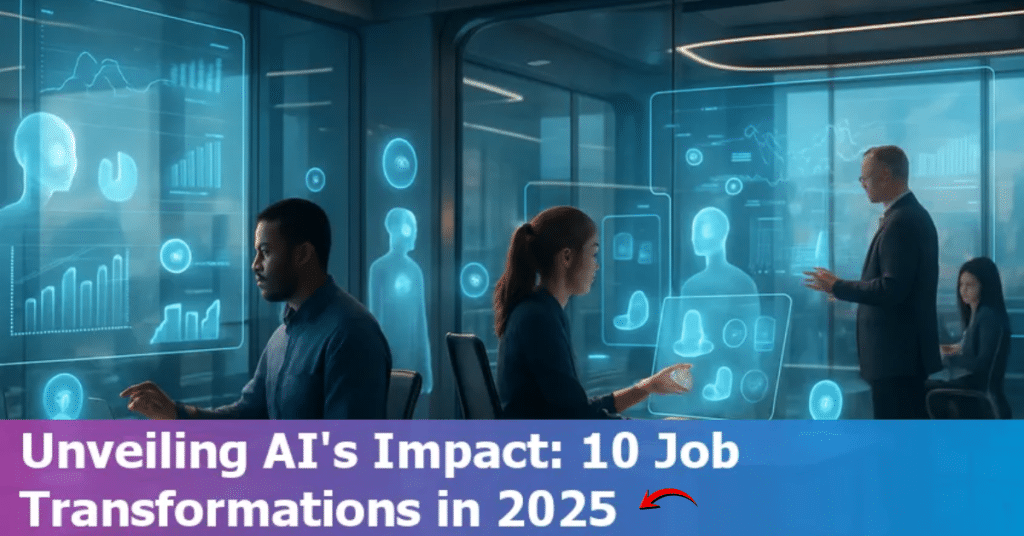
Automation workforce impact grows, but preparation wins. Salesforce shows smart firms retrain, not just fire. Learn tools via free courses – many firms offer them.
AI job displacement feels real with 17,000 direct cuts in 2025, yet total job churn stays normal at 5 million monthly. No apocalypse, just evolution.
Visit Salesforce Blog for their plans or World Economic Forum Jobs Report for global views. McKinsey AI Insights adds business angles.
In the end, future of work AI favors adapters. Salesforce’s story says act now: blend your skills with AI for security. Your next role might mix human insight with smart tools.








Comments are closed.