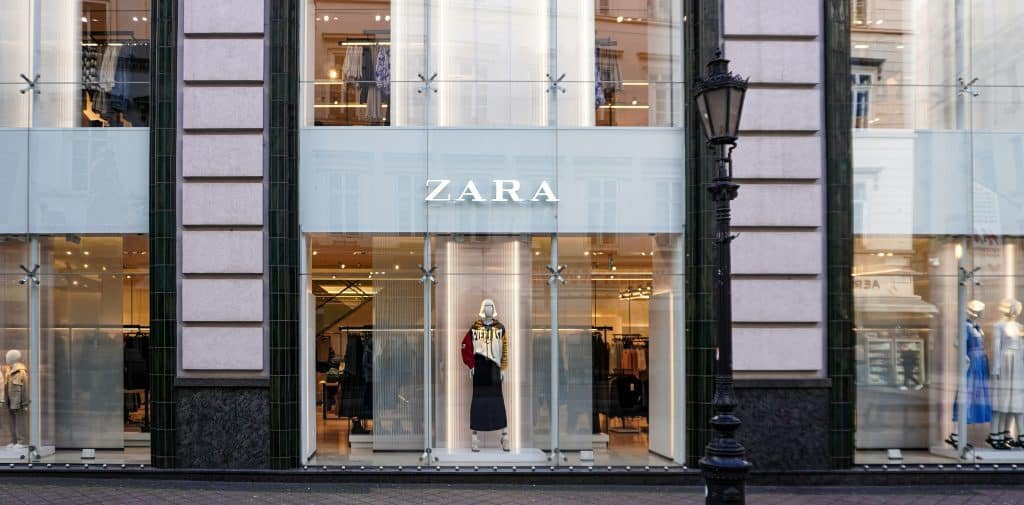
Zara is quietly testing the limits of generative AI in everyday retail operations, beginning with an area that rarely features in technology discussions: product imagery.
Recent reports indicate that the retailer is using AI to generate new images of real models wearing different outfits based on existing photoshoots. Models remain part of the process, including consent and compensation, but AI allows Zara to extend and adapt approved imagery without restarting production from scratch. The goal is straightforward: speed up content creation while reducing the cost and time associated with repeated shoots.
At first glance, this appears to be a minor operational tweak. In reality, it reflects a familiar pattern in enterprise AI adoption. Rather than redesigning how the business works, the technology is introduced to remove friction from tasks that repeat at scale.
Reducing friction in repeatable retail work
For a global retailer like Zara, product imagery is not a creative afterthought. It is a core production requirement that directly affects how quickly items can be launched, refreshed, and sold across markets. Each product typically requires multiple visual variations for different regions, digital platforms, and campaign cycles. Even when garments change only slightly, the surrounding production process often starts over.
This repetition creates delays and costs that are easy to ignore precisely because they are routine. Generative AI offers a way to compress these cycles by reusing approved assets and producing variations without resetting the entire workflow.
Integrating AI into the production pipeline
Where the technology is placed matters as much as what it can do. Zara is not presenting AI as a standalone creative tool or forcing teams into new workflows. Instead, it is embedded within the existing production pipeline, delivering the same outputs with fewer handoffs. The emphasis remains on throughput and coordination, not experimentation.
This approach is typical once AI moves beyond pilot projects. Rather than asking organisations to rethink their processes, the technology is applied at points where constraints already exist. The central question becomes whether teams can move faster with less duplication—not whether AI can replace human judgment.
The imagery initiative also aligns with Zara’s broader data-driven operations. The company has long relied on analytics and machine learning to forecast demand, allocate inventory, and respond quickly to shifts in customer behaviour. These systems depend on tight feedback loops between what customers see, what they buy, and how inventory moves.
Seen this way, faster content production supports the wider organisation even without being framed as a strategic shift. When imagery can be updated or localised more quickly, it reduces lag between physical stock, online presentation, and customer response. Each improvement is incremental, but together they help sustain the speed that fast fashion depends on.
From experimentation to routine use
Notably, Zara has avoided grand claims about this initiative. There are no public figures on cost savings or productivity gains, and no suggestion that AI is transforming the creative function. The scope remains narrow and operational, limiting both risk and expectations.
This restraint often signals that AI has moved out of experimentation and into routine use. Once technology becomes part of daily operations, companies tend to talk about it less, not more. It stops being an innovation story and starts functioning as infrastructure.
Constraints also remain clear. Human models and creative oversight are still central to the process, and AI-generated imagery does not operate independently. Quality control, brand consistency, and ethical considerations continue to shape how the tools are used. AI extends existing assets rather than generating content in isolation.
This reflects how enterprises typically approach creative automation. Instead of replacing subjective work, they focus on the repeatable components around it. Over time, these incremental changes reshape how effort is allocated, even if core roles remain unchanged.
Zara’s use of generative AI does not signal a reinvention of fashion retail. It illustrates how AI is beginning to reach parts of large organisations that were once seen as manual or difficult to standardise—without fundamentally altering how the business operates.
In large enterprises, this is often how AI adoption becomes durable. It does not arrive through sweeping strategy announcements or dramatic claims. It takes hold through small, practical improvements that make everyday work slightly faster—until those improvements become impossible to imagine working without.