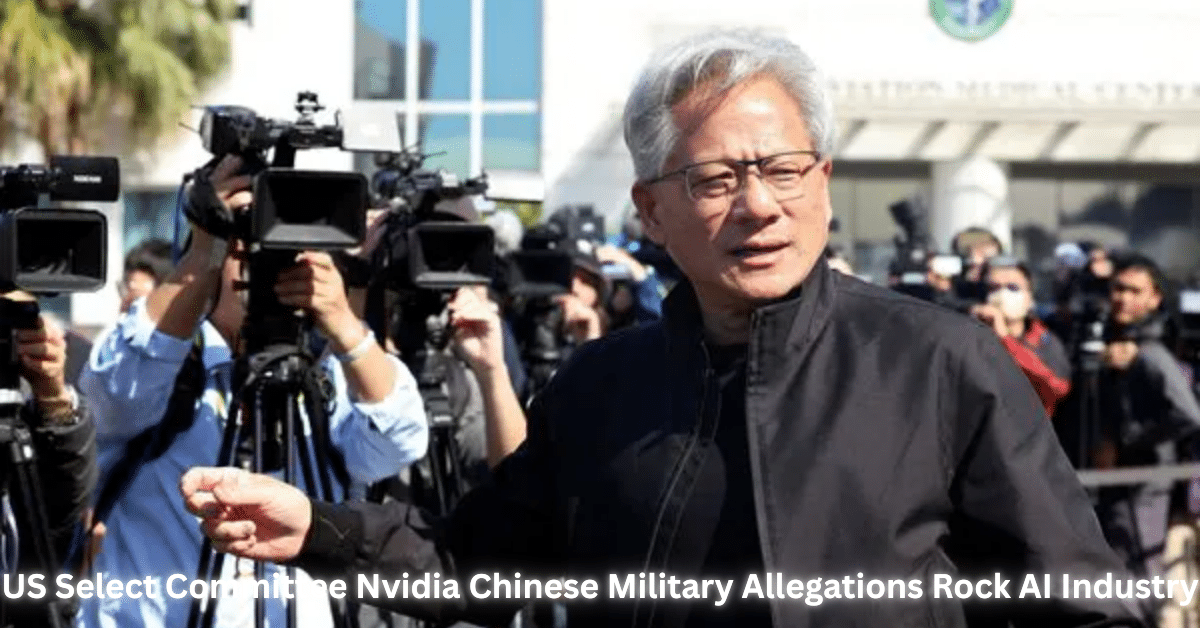
US Select Committee Nvidia Chinese military allegations have ignited a firestorm in the AI sector, claiming Nvidia’s AI tech inadvertently bolstered China’s defense capabilities. On January 28, 2026, House Select Committee Chairman John Moolenaar fired off a stark letter to Commerce Secretary Howard Lutnick, exposing how Nvidia DeepSeek AI collaborations fueled PLA AI capabilities.The controversy erupts as Nvidia CEO Jensen Huang aggressively pursues chip export approvals amid tightening U.S. restrictions. This breaking development pits American innovation against national security fears, with lawmakers demanding ironclad safeguards on advanced semiconductors.
Key Highlights
1.US Select Committee Nvidia Chinese military allegations expose critical national security risks in AI tech exports.
2.Lawmakers demand stricter US Commerce export rules: End-user certifications, PRC model bans in U.S. systems, full Nvidia disclosure.
3.House Select Committee China Chairman John Moolenaar’s January 28, 2026 letter reveals Nvidia DeepSeek AI technical support boosted DeepSeek V3 model performance using restricted Nvidia H800 chips.
4.Models later integrated into PLA AI capabilities, enhancing Chinese military AI tech for cyber operations and intelligence.
5.Jensen Huang chip exports push for Nvidia H200 restrictions relief collides with probe, risking U.S. AI dominance amid AI chip smuggling China concerns.
6.Nvidia technical support optimizations slashed DeepSeek’s compute needs by 10x, achieving U.S.-level results despite export curbs.
US Select Committee Nvidia Chinese Military Probe Details
The House Select Committee China investigation uncovers documents showing Nvidia technical support propelled DeepSeek’s frontier AI models, later integrated into People’s Liberation Army systems. Moolenaar highlighted that DeepSeek V3 model, trained on restricted Nvidia H800 chips, achieved breakthroughs rivaling U.S. leaders despite export curbs.
“Nvidia provided extensive technical support that enabled DeepSeek—now a demonstrated cybersecurity risk within PLA AI capabilities—to reach cutting-edge performance,” Moolenaar wrote in his letter. These revelations challenge Nvidia’s narrative of purely commercial partnerships, raising alarms over Chinese military AI tech advancements.
DeepSeek, a CCP-backed startup, routes user data through infrastructure linked to U.S.-sanctioned military firms while enforcing Beijing’s censorship. Despite this, Nvidia treated it as a standard client, offering optimizations that supercharged model training efficiency.
Jensen Huang Chip Exports Face Mounting Scrutiny
Jensen Huang chip exports ambitions clash directly with these findings. Just weeks ago, the Trump administration greenlit limited Nvidia H200 restrictions sales to China, barring military end-users but sparking bipartisan backlash. Critics fear these powerful GPUs—far superior to H800s—could turbocharge adversarial AI systems.
Nvidia counters aggressively: “China possesses ample domestic chips for military needs; it makes no sense for the Chinese military to rely on American tech.” Yet, the company sidesteps specifics on DeepSeek aid, which occurred in 2024 before public PLA links surfaced. As Jensen Huang courts Washington for broader approvals, lawmakers like Moolenaar warn against undermining U.S. AI dominance.
This saga echoes prior scandals, including AI chip smuggling China rings moving $160 million in controlled GPUs. Two Americans and Chinese nationals faced charges last year for illicit H100 exports, underscoring enforcement gaps.
Nvidia DeepSeek AI Ties Spark National Security Debate
Delving deeper, Nvidia DeepSeek AI documents reveal engineers fine-tuned training runs on H800 hardware, slashing compute demands while boosting accuracy. DeepSeek’s technical report credits these tweaks for V3’s edge, models now embedded in PLA networks for cyber operations and propaganda tools.
The House Select Committee China urges US Commerce export rules clarification: Mandate end-user certifications blocking military diversions, even if it halts H200 shipments entirely. They also push bans on PRC AI models like those from Alibaba and Tencent in U.S. systems, citing IP theft and data risks.
Nvidia insists its ecosystem support fosters global competition, safeguarding American jobs and leadership. “Critics unintentionally aid foreign rivals by curbing vetted commerce,” the firm stated. Still, Moolenaar’s probe demands Nvidia detail all DeepSeek interactions and compliance measures.
Implications for AI Business and Global Tech Race
These US Select Committee Nvidia Chinese military developments ripple across AI business and automation. Investors watch closely as Nvidia’s $3 trillion valuation hinges on China revenue, now under threat. Jensen Huang’s recent D.C. charm offensive sought H20/H200 licenses, but congressional heat could delay or derail them.
For aicorenews.com readers, this underscores AI tools dual-use perils. As AI reshaping work and therapists transforms industries, military applications demand vigilance. U.S. firms must balance innovation with safeguards, lest breakthroughs empower foes.
Broader Nvidia H200 restrictions could reshape supply chains. China accelerates domestic chips like Huawei’s Ascend, but Nvidia’s CUDA software edge persists. Lawmakers propose “AI guardrails” akin to nuclear non-proliferation, prioritizing security over sales.
DeepSeek V3 Model and PLA Integration Exposed
DeepSeek V3 model prowess stems from Nvidia technical support, per committee files. Optimized clusters achieved U.S.-level results with 10x less power, alarming Pentagon analysts. PLA adoption spans intelligence analysis to autonomous weapons, per U.S. intelligence.
China’s embassy dismisses politicized tech curbs, claiming self-reliance. Yet, DeepSeek’s H200 purchase approval—conditional on Beijing regulators—fuels fresh scrutiny. See the official House Select Committee letter and Reuters deep dive for primary evidence.
Path Forward: Stricter US Commerce Export Rules
Moolenaar’s recommendations target US Commerce export rules loopholes. Require traceable H200 end-use, ban PRC models in federal systems, and probe ongoing DeepSeek ties. Nvidia faces subpoenas for fuller disclosure, potentially reshaping PLA AI capabilities.
As Chinese military AI tech evolves, U.S. policymakers debate total bans versus vetted exports. Jensen Huang vows compliance, but trust erodes. For AI innovators, this saga signals: Export smarts today could arm tomorrow’s threats.
The House Select Committee China vows relentless oversight, ensuring AI chip smuggling China schemes falter. Stakeholders await Commerce’s response, pivotal for Nvidia’s global playbook.
conclusion
As US Select Committee Nvidia Chinese military tensions escalate, the AI industry faces a defining moment where innovation must align with national security. Jensen Huang chip exports ambitions highlight AI business vulnerabilities, urging stricter US Commerce export rules to curb PLA AI capabilities. For aicorenews.com readers tracking AI tools evolution, this saga demands vigilant oversight—ensuring American AI leadership endures against Chinese military AI tech advances.