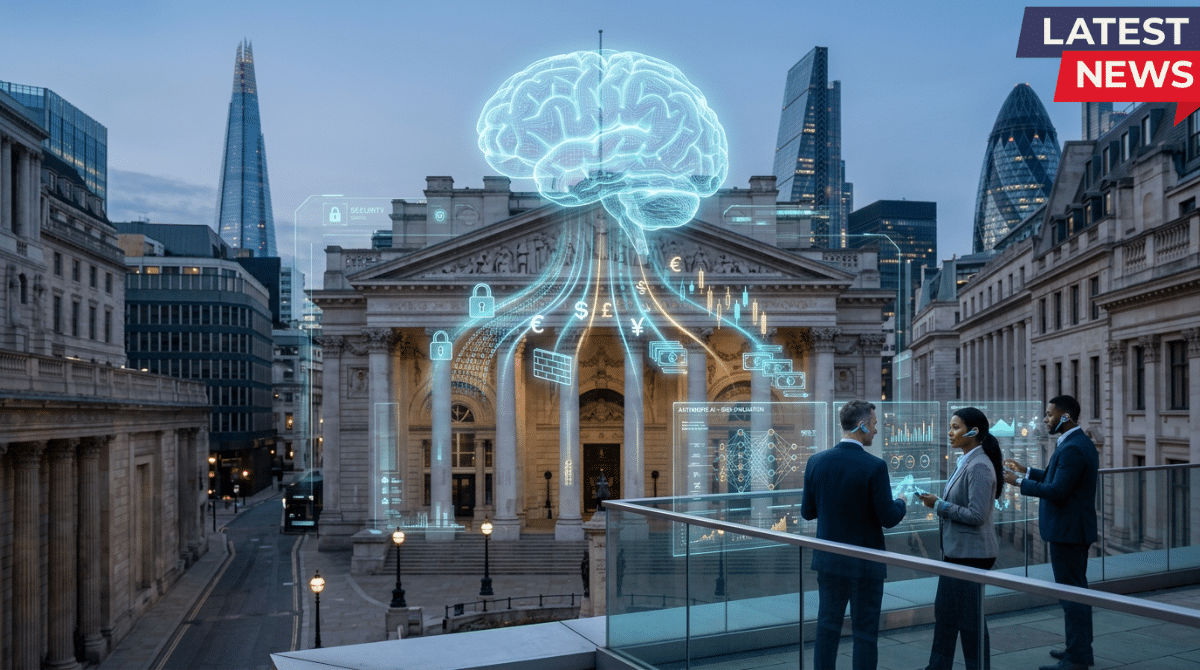
UK financial regulators rush to assess risks of Anthropic AI model after reports that the latest version, Claude Mythos Preview AI, can quickly find serious security flaws in software used by banks and other critical systems. Regulators are now working with the Bank of England, the government’s cyber security agency, and major UK banks to understand how this model could affect safety, data, and the overall financial system.
Why this matters now
The move shows how fast AI is becoming a core risk issue for the finance sector, not just a tech experiment. If powerful models like Anthropic’s Claude can spot vulnerabilities in critical IT systems in banks, they could also be misused by attackers to cause real damage to markets, accounts, and customer data. This is why UK financial regulators and bank leaders are treating the issue as a serious, urgent priority.
In the rest of this article, you will learn:
- What Anthropic’s model can do and why it worries regulators
- How the Bank of England, FCA, and NCSC are responding
- What this means for UK banks and your money
- How AI security assessment finance is changing rules and habits
Key Summary
- UK financial regulators, including the Bank of England and FCA, are holding urgent talks with the National Cyber Security Centre and major banks.
- They are focusing on Anthropic AI model capabilities, especially Claude Mythos Preview AI’s ability to find hidden software bugs and security holes.
- The concern is AI cyber risks finance: if bad actors control similar tools, they could target critical IT systems in banks much faster than before.
- Regulators plan more AI security assessment finance tests and may require stricter rules for how banks deploy large AI models.
- For banks and fintech firms, this means stronger AI risk management practices and tighter checks on how AI is used in core systems.
UK financial regulators rush to assess AI model risks
UK financial regulators rush to assess risks of Anthropic AI model because early tests show that the latest version can scan complex code and uncover old, hidden security flaws that humans and older tools missed. In some cases, it has reportedly found thousands of vulnerabilities, including in widely used operating systems and web browsers. For a bank or stock exchange, even a single weak point in their software can open the door to serious cyber attacks.
Regulators are particularly worried about AI model vulnerabilities that could be exploited. If the same model that finds bugs today is used by criminals tomorrow, attacks could become faster, more automated, and harder to stop. This is why regulators are asking banks to explain how they plan to use, limit, and monitor any advanced AI, especially if it touches customer data or trading systems.
Under this new focus, AI risk management is no longer optional. Regulators want clear answers on:
- Which AI models are used
- What data they can access
- How decisions are reviewed by humans
- How risks are tested under stress
Who is involved: Bank of England, FCA, and NCSC
Behind this response sits a powerful group of UK institutions. The Bank of England is leading the work on AI and financial stability, asking whether tools like Anthropic’s model could increase the chance of big system‑wide shocks. The Financial Conduct Authority (FCA) is focusing on FCA AI oversight, checking how firms protect consumers, prevent fraud, and keep markets fair.
The National Cyber Security Centre (NCSC) brings expertise in AI cyber risks finance, helping regulators understand which parts of the financial system are most exposed. Together, they are running joint meetings and planning more AI security assessment finance exercises, where banks will be asked to simulate how bad actors could misuse AI‑driven tools.
For example, regulators are exploring how an attacker might use an AI model to:
- Analyze publicly available code and find weak spots
- Generate realistic phishing messages or fake trader behavior
- Automate attacks against payment and trading systems
This kind of scenario planning is exactly why critical IT systems in banks are now under closer review.
What the Anthropic model can do (and why it’s a double‑edge sword)
The Anthropic AI model, particularly Claude Mythos Preview AI, is built to read and understand complex text, code, and documents at high speed. In the right hands, it can:
- Help banks and security teams scan software for hidden bugs
- Suggest faster patches and fixes
- Improve threat detection by spotting patterns in logs and reports
This is why Anthropic has also launched a defensive project, letting selected organizations use the model to strengthen their defences. But the same power can be turned against the system. If a similar model falls into the wrong hands, it could:
- Expose AI model vulnerabilities in core banking software
- Speed up attacks on trading platforms or customer login systems
- Create new, hard‑to‑detect threats that humans cannot easily spot
This is why AI security assessment finance is becoming a must‑have skill, not a nice‑to‑have. Regulators want firms to assume that powerful AI tools will be available to attackers and build systems that can handle that reality.
Impact on UK banks and your money
If UK financial regulators rush to assess risks of Anthropic AI model and similar tools, the changes will touch almost every bank and fintech company. We may see:
- New rules about which AI models can be used in live trading, payments, or customer support
- Higher requirements for AI risk management, including regular stress tests and red‑teaming
- More transparency about how AI decisions are made, so humans can review and correct mistakes
For everyday users, this means:
- Better protection for your bank accounts and cards, as companies tighten controls around AI usage
- Fewer sudden outages or cyber events, because weak points in critical IT systems in banks are found and fixed earlier
- Possible friction in some services (for example, extra checks or slower approvals) as firms adjust to new rules
Overall, the goal is to keep finance safe without killing the benefits of AI, such as faster fraud detection and smarter customer support.
How regulators might change AI rules in finance
As part of this review, UK financial regulators are likely to move toward:
- Standardized AI security assessment finance tests for all large AI models used in banking
- Clear rules about how much data AI models can access (for example, limiting direct access to live customer databases)
- Stronger AI risk management frameworks, where firms must prove they can explain, monitor, and stop AI when it goes wrong
There is also talk about requiring banks to report AI‑related incidents, just like data breaches or system failures. This would help regulators see problems early and share lessons across the industry. In the long run, the UK could become a leader in AI governance for finance, showing other countries how to balance innovation and safety.
What this means for you and your business
For individual users, this story is a reminder that AI is no longer just a “tech thing” in the background. When AI cyber risks finance touch banks and payment systems, they can affect your money, your privacy, and how quickly problems are fixed. Staying informed about how firms use AI and what safeguards they have is an important part of protecting yourself.
For businesses and developers, AI risk management is becoming a core skill. If you build or use AI tools for finance, you should:
- Understand which parts of your system are most exposed
- Limit data access and always keep humans in the loop for big decisions
- Plan for regular AI security assessment finance checks and updates
If you are interested in practical ways to protect your business, our Guide to AI security and risk management for businesses walks through simple steps you can take today.
Final thoughts
UK financial regulators rush to assess risks of Anthropic AI model because they see AI as both a powerful helper and a serious new threat to the financial system. By focusing on AI model vulnerabilities, AI cyber risks finance, and critical IT systems in banks, they are trying to keep markets safe without slowing down useful innovation. For you, this means more secure banks, smarter tools, and a clearer path for how AI will be used in finance.
If you want to stay up to date with the latest AI regulation news in the UK and Europe, you can follow our Latest AI regulation news in the UK and EU section.